
It was the 8th of March 2014. A Friday night leading into Saturday morning. Kuala Lumpur International Airport in Malaysia was doing what airports do at midnights and daytimes, receiving and checking passengers into their flights.
Announcements echoing everywhere. People moving their luggages. Some sitting and waiting, some half asleep. Some checking their phones one last time before boarding. Some hugging the people who came to see them off, not knowing, none of them knowing, that some of those hugs would be the last ones.
239 people boarded a flight and have never been seen again.
Okezie Ekugo
No, this is not a story I made up. It’s a story that actually happened.
Malaysia Airlines Flight MH370 was preparing to depart.
The destination was China. Beijing in particular. A normal flight like everyday. The kind that happens hundreds of times every day across the world. So normal that most of the 227 passengers probably settled into their seats, accepted a pillow from the cabin crew, and closed their eyes before the plane even finished climbing.

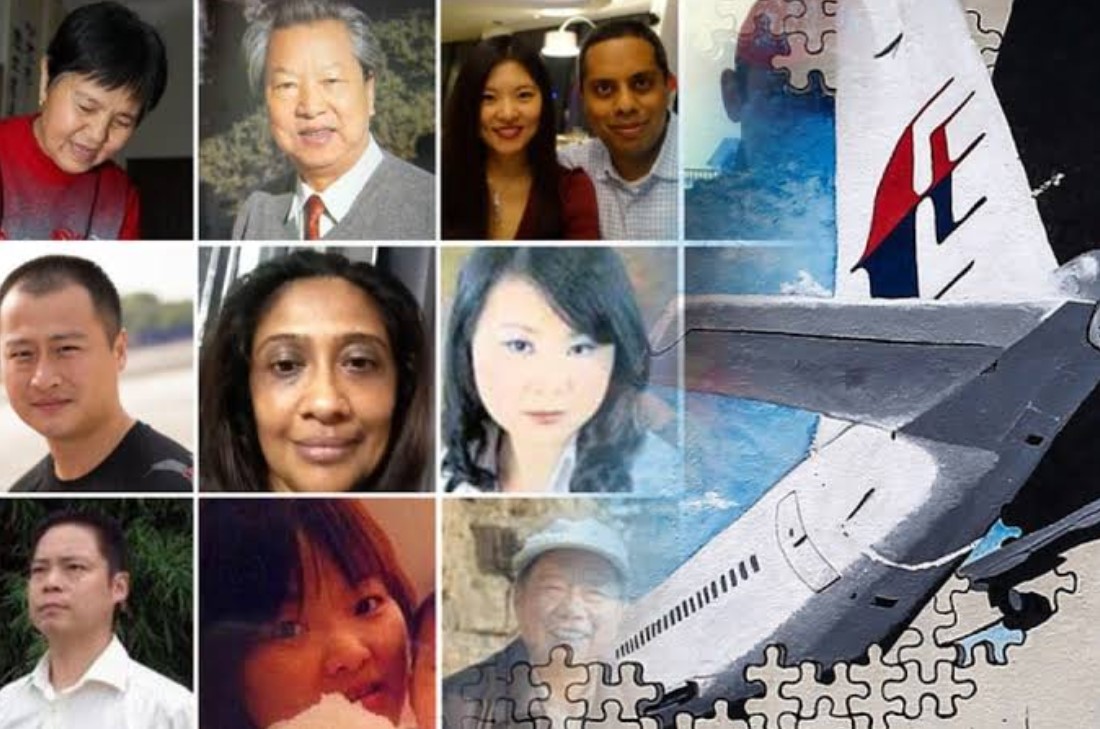
There were families on that plane. There were businessmen. There were students. There were couples. There was a group of 20 Chinese artists returning home from an exhibition they had attended together. There were two little children. There were people who had big plans for the weekend. People who had promised to call when they landed. People who had fights with their spouses the night before and were planning to apologize when they got back.
Real human beings. With real lives attached to them.
239 of them in total.
The plane took off at 12:41am.
And then, somewhere over the dark water between Malaysia and Vietnam, something happened.
Nobody knows exactly what.
At 1:19am, the co-pilot spoke his last recorded words to air traffic control. “Good night. Malaysian three seven zero.” The kind of sign-off that controllers hear a thousand times every normal week.
 Then silence.
The plane did not arrive in Vietnamese airspace the way it was supposed to. Air traffic controllers tried to make contact. Nothing. They tried again. Nothing. They alerted the Malaysian authorities. Alarms began to sound in the quiet offices of people whose job is to make sure planes do not disappear.
But this one had.
What the military radar later revealed made everything stranger. The plane had turned. Not because of an emergency landing. Not drifting off course. A deliberate, programmed turn. Away from Beijing. Back across the Malaysian peninsula. Then northwest. Then, at some point that investigators are still not fully agreed on, south. Deep south. Into the most remote stretch of ocean on this planet, the southern Indian Ocean, where the water is so deep and so dark and so far from everything that even satellites have trouble seeing clearly down there.
Why did the plane turn? Where was it going to that it had to turn backwards instead of moving forward to China?
The plane flew for approximately seven more hours after that last spoken word.

Seven hours.
Where was it going to?
Think about what that means. Think about the people sitting in those seats for seven hours. Did they know something was wrong? Were they asleep? Were they afraid? Were they praying? Were they looking out the window at an ocean that had no coastline in any direction?
We do not know.
We do not know because nobody who was on that plane has ever been found.
Not one person. Not one body. Not one bag. Not one shoe. Not one photograph from someone’s holiday album fluttering on the surface of the water.
Nothing.
Search teams came from everywhere. Australia. China. America. Malaysia. Ships covered search zones the size of countries. Underwater drones were sent into depths where sunlight has never reached, crawling along the ocean floor like mechanical eyes looking for something, anything, a shape that did not belong there.
They found the emptiness of the ocean, with no single record of anything.
A year later, a piece of the plane’s wing washed up on a tiny island called Reunion, off the coast of Madagascar. Then a few more pieces, scattered across beaches in Mozambique, Tanzania, South Africa. Pieces. Fragments. The ocean returning small pieces of something it had swallowed whole. All the way down to different places in Africa.
But the plane itself?
Seems it settled somewhere on the floor of the Indian Ocean, in a grave the water has never allowed anyone to open.
And the 239 people?
Still missing. To this day.
Now let me tell you about the families.
There was a woman in Beijing who waited at the arrivals hall for hours after the flight was supposed to land. She kept calling her husband’s phone. It rang. Which felt, for one terrible moment, like hope. Until she understood that a ringing phone and an answered phone are two completely different things.
How come that phone rang even though it was never answered?
There was a child who was told that her father had gone on a long trip and would be back soon. She is older now. She has grown up in the years since. And her father has still not come back from that long trip.
There were parents who had already started planning a welcome home meal when the news broke. Who sat at a table set for someone who would never sit down at it again.
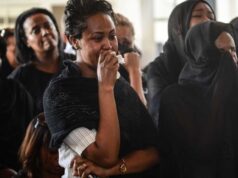
There were people who did not even get the closure of a funeral. Because you cannot bury what you cannot find. You cannot stand over a grave if there is no grave. You just have to find a way to carry the weight of not knowing what happened to your person. Every single day. For ten years now and counting.
That weight alone is its own kind of death.
There were families who refused to accept the conclusion that their loved ones were gone. Not out of denial. It was out of the very reasonable human position that you should not be asked to accept someone’s death when you have been given no evidence of it. No human body discovered. No confirmed wreckage. No final resting place.
The investigation was opened, suspended, reopened, handed to private companies, debated in international courts, and subjected to more theories than perhaps any other aviation mystery in history. Pilot suicide. Hypoxia. Hijacking. Mechanical failure. Military incident. Every theory has its evidence. Every theory has its holes.
And ten years after it happened, the official position of the world’s most sophisticated aviation authorities on what exactly happened to MH370 remains, in its simplest terms, this:
We are not sure.