
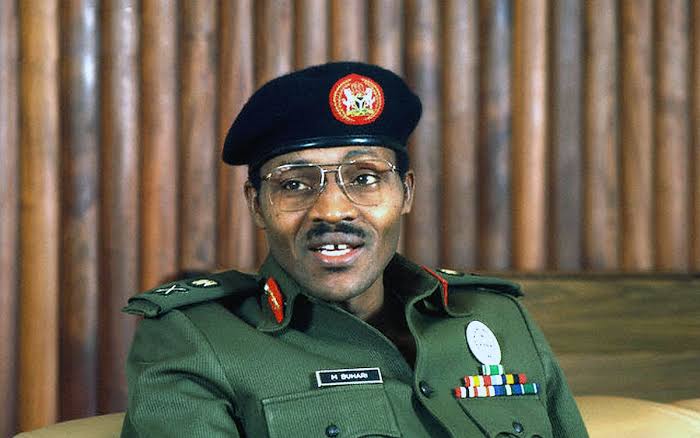
It was Sallah Day — Eid al-Adha — on 26 August 1985. At Dodan Barracks in Lagos, Nigeria’s military president, Major-General Muhammadu Buhari, grew increasingly uneasy. By early afternoon, only a handful of top army officers had come to greet him. More tellingly, his Chief of Army Staff, Major-General Ibrahim Babangida — who was celebrating in Minna — had not called. In the rigid hierarchy of military protocol, especially on a major Muslim holiday, such silence from a key subordinate was not just rude. It was ominous.
Buhari, a seasoned army man, sensed trouble. He instructed his Aide-de-Camp, Major Mustapha Jokolo, to reach Babangida. The phone rang unanswered. Attempts to contact other loyalists, including Major-General Sani Abacha (GOC of the 2nd Mechanized Infantry Division in Ibadan, responsible for Lagos security), also failed. The net was closing.
Nigeria in 1985: A Nation Under Military Strain
Buhari had come to power in the December 1983 coup that ousted the civilian government of Shehu Shagari, promising to tackle corruption, indiscipline, and economic mismanagement. His regime launched the “War Against Indiscipline” and detained many politicians and officials. But by mid-1985, discontent was simmering within the military. Economic hardships, authoritarian measures, and internal rivalries created fertile ground for another power shift.
Babangida, a charismatic and ambitious officer with a network of supporters, positioned himself as the alternative. The coup plotters moved with precision, ensuring key commands and units were either neutralized or co-opted.
The Main Players
– Major-General Muhammadu Buhari: The sitting Head of State, known for his austere, no-nonsense style. On that day, he faced the isolation of power.
– Major-General Ibrahim Babangida: The coup leader. Charismatic, strategic, and well-connected. He would later rule as military president for eight years, introducing economic reforms and a transition program that ultimately led to the controversial June 12, 1993 election annulment.
– Major-General Sani Abacha: Then GOC 2nd Division. A key figure whose silence (and later alignment) was pivotal.
– Supporting Officers: Including the arresting team of Majors Abdulmumuni Aminu, Lawan Gwadabe, and John Madaki, and others like Captain Maitama who played roles in neutralizing potential resistance.
The Critical Hours: Suspicion Turns to Certainty
By mid-afternoon, Buhari’s fears mounted. He sent Captain Maitama to Ibadan to locate Abacha — unaware that Maitama and others were part of the plot. His Brigade of Guards commander, Lieutenant-Colonel Sabo Aliyu, and ADC Jokolo went to Ikeja Cantonment seeking reinforcements, only to be arrested and reportedly flogged by Major John Madaki.
As evening fell and calls to potential allies (including the GOC 3rd Division in Jos) went unanswered or led to arrested officers, Buhari realised the game was over. According to accounts, he told his wife Safinatu: “I am going to take my bath now then say my prayers. I am not going to come down again. I will be waiting upstairs to be arrested.”
Around 9:00 p.m., the three majors arrived at Dodan Barracks. With most guards already won over or neutralised, they had unfettered access. Major Aminu went upstairs to take Buhari into custody. The coup had succeeded with minimal resistance.
Behind the Scenes: Planning and Betrayal
The coup was meticulously planned. Babangida had cultivated loyalty across key units. The timing on a public holiday caught many off guard. Buhari’s regime had alienated segments of the military through perceived high-handedness and slow progress on economic issues. Babangida’s group framed the takeover as necessary for better governance and national direction.
Buhari was detained but later released. Babangida assumed power, promising a return to civilian rule while consolidating military authority.
The Consequences
Babangida’s regime (1985–1993) was marked by economic structural adjustment, infrastructural projects, and a more flamboyant style than Buhari’s austerity. However, it also saw increased corruption allegations, human rights concerns, and the eventual annulment of the 1993 elections, which plunged Nigeria into further crisis and led to Abacha’s takeover in 1993.
Buhari would later return to power democratically in 2015, completing a remarkable political journey.
Why This Story Still Matters
The 1985 coup exemplifies the recurring pattern of military interventions in Nigeria’s early post-independence history. It highlights the fragility of power, the importance of loyalty within the armed forces, and how personal and institutional rivalries can reshape national trajectories. In today’s Nigeria, where civilian democracy has endured since 1999, these events serve as reminders of the costs of instability and the value of constitutional order.
The reel, accompanied by Babangida’s coup speech, vividly captures the drama of that Sallah Day. It is a window into a pivotal moment when one general’s ambition and a network of loyal officers changed the course of Nigerian history — leaving Buhari to wait upstairs as history unfolded downstairs.
The full story, pieced from historical accounts, remains a compelling chapter in Nigeria’s military-political saga.