

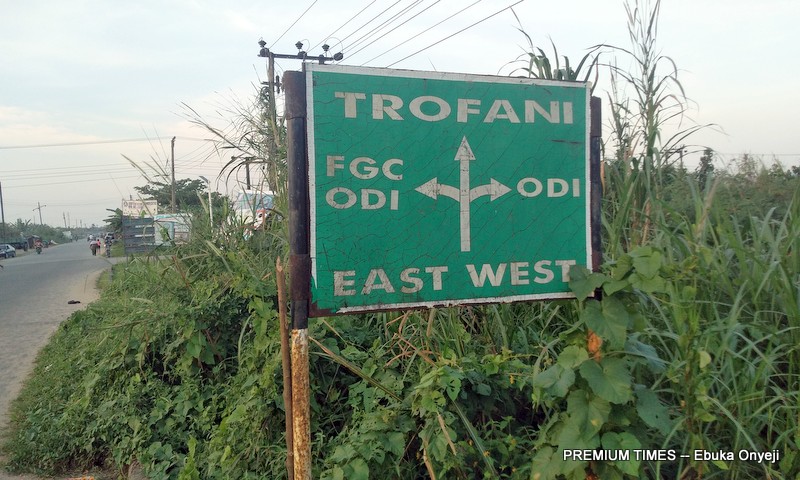
On 4 November 1999, an armed gang attacked and killed 12 policemen in the Ijaw community of Odi, Bayelsa State, in the oil-rich Niger Delta. The killings were part of the growing militancy and criminality that had taken root in the region after years of perceived marginalisation, environmental degradation from oil exploration, and weak governance.
The federal government under President Olusegun Obasanjo viewed the attack as a direct challenge to state authority. Within days, the President issued a stern warning and a two-week ultimatum to the Bayelsa State government and local leaders to produce the killers or face decisive military action
The Order and the General Who Executed It
When the ultimatum expired without the suspects being handed over, President Obasanjo gave the direct order for a military operation to restore law and order in Odi. The operation was carried out under the command of the Chief of Army Staff at the time, Lieutenant General Victor Malu.
On 20 November 1999, troops moved into Odi. What followed was not a targeted raid to arrest suspects but a full-scale assault on the entire town. Soldiers surrounded the community, blocked escape routes, and engaged in heavy bombardment. Almost every building in Odi — except the bank, the Anglican church, and the health centre — was destroyed. The town was effectively razed.
Human rights organisations and local accounts put the civilian death toll in the hundreds (some estimates exceed 900), with many women and children among the victims. The military claimed they were targeting armed militants who were using civilians as cover, but the scale of destruction left Odi in ruins and deepened resentment in the Niger Delta.
Why Obasanjo Gave the Order
Obasanjo, a retired general himself who had just returned as a civilian president after years of military rule, was determined to show that his administration would not tolerate attacks on security forces or threats to national unity. The Niger Delta was already restive, with militants attacking oil installations and kidnapping workers. The killing of 12 policemen was seen as a red line.
The operation was intended as a strong deterrent — a message that the federal government would respond with overwhelming force to any group that challenged its authority. In Obasanjo’s calculation, decisive (some say brutal) action was necessary to reassert control and prevent the spread of lawlessness in the oil-producing region.
The Contrast: Decisive (Though Controversial) Action vs. Today’s Perceived Weakness
Obasanjo’s handling of Odi stands in sharp contrast to the approach of many current leaders when facing similar or even worse security challenges.
In 1999, a sitting president gave a clear, public order, set a deadline, and followed through with military force when it was not met. The action, however excessive it was judged to be by critics, sent an unambiguous signal: the state would not negotiate with those who killed its security personnel.
Today, Nigeria faces far more widespread and sustained insecurity — banditry across the Northwest and Northcentral, kidnapping for ransom on an industrial scale, and pockets of insurgency. In many cases, governors and federal authorities have been accused of negotiating with bandits, paying ransoms, or failing to follow through on threats. Communities are repeatedly attacked, schools are shut down, and citizens live in fear while leaders issue statements but struggle to restore lasting order.
Where Obasanjo projected raw state power (at great human cost), many current leaders are seen as reactive, inconsistent, or overly cautious — sometimes appearing to appease criminal elements rather than confront them decisively. The result has been a perception of weakness that emboldens criminals and erodes public confidence in the government’s ability to protect lives and property.
The Lasting Lesson
The destruction of Odi remains one of the darkest chapters of Obasanjo’s civilian presidency. While it may have temporarily cowed some militant groups, it also fuelled long-term grievances in the Niger Delta and raised serious questions about proportionality and human rights.
Yet the episode also highlights a fundamental difference in leadership style: Obasanjo was willing to wield overwhelming state power when he felt the authority of the republic was directly challenged. In contrast, the current era has often been marked by hesitation, negotiation, and an inability to impose lasting order — allowing lawlessness to spread across multiple regions.
The Odi operation was brutal. But it was also a clear demonstration of a leader who believed that the state must be seen to be strong. Today’s Nigeria continues to pay the price for the absence of that same clarity and resolve in confronting criminal networks that now operate with greater boldness and geographic spread than the militants of 1999 ever did.