
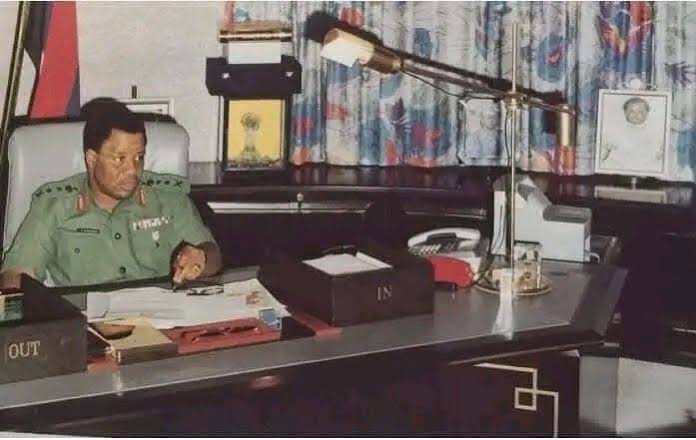
One of the most dramatic acts of bravery and strict adherence to protocol during Nigeria’s military era occurred on April 22, 1990, during the failed Gideon Orkar coup attempt against then-military President Ibrahim Babangida.
In the early hours of that Sunday morning, around 3:00 a.m., a group of young officers led by Major Gideon Orkar launched a violent assault on Dodan Barracks in Lagos. The coupists overran parts of the presidential residence, killing Babangida’s Aide-de-Camp, Lt. Col. Usman K. Bello (also referred to as U.K. Bello).

Lt. Col. Bello, a loyal and courageous officer, had stepped out to confront and engage the attackers. He openly identified himself as the President’s ADC and attempted to resist the coupists. In the ensuing firefight, Bello and his small team of loyal troops were sprayed with bullets. He was shot and killed, becoming one of the notable casualties of the coup attempt. His death added to the chaos as the plotters pressed their attack on the State House.
With Babangida, his wife, and children trapped inside and very limited security remaining, the most senior officer present was Captain Kassim Omowa. In the heat of the crisis, Captain Omowa broke protocol and directly addressed the President. He insisted that he had to evacuate him immediately through a secret underground tunnel — but alone if necessary, in line with standard secret service operating procedure that prioritises the safety of the Head of State above all else.

Babangida reportedly resisted, saying he would not leave without his family and that he could not take orders from a mere Captain. Captain Omowa stood his ground and replied firmly that he had a job to do and must move the President to safety, even if it meant ignoring his orders.
According to historical accounts citing President Babangida himself, Captain Omowa successfully evacuated him through a concealed passageway, helping to save his life during one of the most serious threats to his regime. The coup was eventually crushed by loyal forces, led in part by then-Chief of Army Staff, Major General Sani Abacha.
This bold act of defiance by a junior officer in the face of extreme danger has become one of the most talked-about moments from the Orkar Coup attempt, highlighting the tension between military hierarchy and emergency protocol.
Source: Gamji.com – The Orkar Coup of April 22, 1990
The failed Orkar Coup remains one of the most significant and radical attempted coups in Nigeria’s history, remembered for its dramatic radio broadcast announcing the excision of five Northern states and other far-reaching declarations.
What do you think about Captain Omowa’s decision to defy the President? Was he right to prioritise protocol over Babangida’s wishes? Share your thoughts in the comment section.