
On July 29, 1975, Nigeria witnessed another major military power shift when a group of senior officers overthrew General Yakubu Gowon, who was attending an OAU summit in Uganda at the time.
The coup was led by five colonels: Colonel Joe Garba (Commander of the Presidential Brigade of Guards), Colonel Abdullahi Mohammed, Colonel Anthony Ochefu, Colonel Ibrahim Taiwo, and Lt. Colonel Shehu Musa Yar’Adua.
According to popular historical narrations, after successfully executing the bloodless coup, the plotters sent for Brigadier Murtala Muhammed, who was on holiday in London. Upon his return, Murtala was brought to Army Headquarters where he met the key plotters.
Colonel Joe Garba reportedly reminded Murtala of a prior discussion two months earlier, in which they had sought his neutrality and promised to install him as Head of State on the condition that he would hand over power to civilians by 1979.
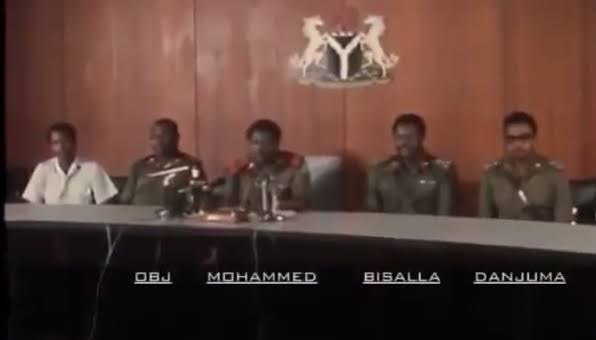
However, the plotters allegedly imposed a major condition: Murtala would not rule with absolute powers. He was to lead in a troika arrangement alongside Brigadier Olusegun Obasanjo (as Chief of Staff, Supreme Headquarters) and Brigadier Theophilus Yakubu Danjuma (as Chief of Army Staff). Major decisions would require consensus or approval from at least two-thirds of the Supreme Military Council.
When Murtala reportedly protested the power-sharing arrangement, the plotters stood firm. Popular accounts claim Colonel Joe Garba told him bluntly: “Sir, it’s either you take it or leave it.”
Murtala eventually accepted the terms and was sworn in as Head of State. This arrangement later shaped the transition that saw Obasanjo take over after Murtala’s assassination in February 1976.
Note: This detailed version of the negotiations, including the specific dialogue, is based on popular historical narrations and oral accounts that have circulated for years. While the existence of a power-sharing troika among Murtala, Obasanjo, and Danjuma is widely accepted in historical literature on the period, the exact wording of the conversation remains anecdotal.
The 1975 coup remains significant as one of the more organised and relatively bloodless military takeovers in Nigeria’s history, setting the stage for the country’s eventual return to civilian rule in 1979.
Source: Historical narration credited to @omolokun1 (featured in the Instagram reel by current_andconvo).
What do you think about the reported power-sharing condition given to Murtala Muhammed? Share your thoughts in the comment section.