

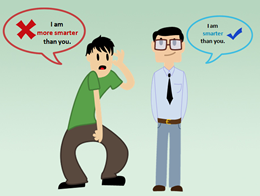
Have you ever told someone, “Sorry, my phone was off”? If yes, you’re not alone. Millions of people use this expression every day. While most people understand what you mean, it’s not always the most natural way to say it in English.
The truth is, your phone isn’t really “off” unless it has been completely powered down.
In many cases, what people actually mean is that their phone battery died, it was on silent mode, or they simply didn’t see the call.
A more natural way to explain the situation would be:
✅ “My phone was switched off.”
✅ “My phone ran out of battery.”
✅ “I didn’t see your call.”
✅ “My phone was on silent.”
These expressions sound clearer and more accurate.
But that’s just one of many English mistakes people make without realizing it.
For example, have you ever said:
❌ “I am understanding what you mean.”
The correct version is:
✅ “I understand what you mean.”
The verb “understand” is usually not used in the continuous form.
Here’s another common one:
❌ “He is my cousin brother.”
✅ “He is my cousin.”
In English, the word “cousin” already tells us the family relationship. There’s no need to add “brother” or “sister.”
Many people also say:
❌ “I am going to my village.”
While this isn’t completely wrong, native speakers often say:
✅ “I’m going to my hometown.”
✅ “I’m visiting my hometown.”
These small changes can make your English sound more natural and polished.
The good thing is that making these mistakes doesn’t mean your English is bad. In fact, everyone makes language mistakes while learning. The key is to keep improving little by little.
Think about it: most fluent speakers today became fluent because they were willing to learn from their mistakes.
So the next time you’re about to say, “My phone is off,” take a second and ask yourself what really happened. Did the battery die? Was it on silent? Or did you simply miss the call?
A small correction can make a big difference.
Now tell us honestly: which English expression have you been saying wrong for years without knowing it?
Drop it in the comments. You might be surprised how many people make the same mistake!