
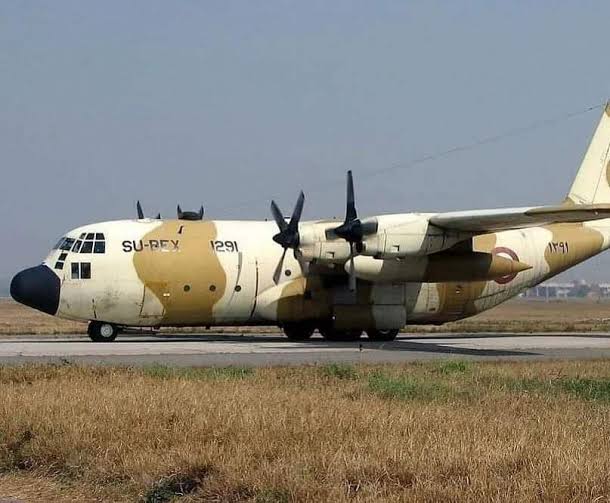
On Saturday, September 26, 1992, Nigeria suffered one of its worst military aviation disasters. A Nigerian Air Force C-130 Hercules transport plane carrying 146 military personnel crashed in Ejigbo, a Lagos suburb, shortly after takeoff from Lagos to Kaduna. The tragedy left deep scars and fuelled persistent conspiracy theories that the crash was not an accident.
What Happened That Day
The four-engine Hercules took off normally but, just three minutes into the flight, two of its engines failed. The pilots attempted an emergency ditching on water in a canal in Ejigbo. They aligned the plane for a controlled landing and issued repeated “Mayday” distress calls to Air Traffic Control at Lagos Airport.
Suddenly, a third engine failed. The pilots lost control, and the plane nose-dived uncontrollably into the muddy waters of the canal. Rescue efforts were delayed. It took the Nigerian Army about five-and-a-half hours to locate the crash site. By then, most of those on board had perished.

The aircraft carried 97 army officers of the rank of Major, seven Colonels, 26 Air Force personnel, 17 Naval officers, one sergeant, three army civilian staff, eight foreign military officers, and an unknown number of civilians (relatives and friends who hitched a ride).
The Rumours That Refused to Die
Almost immediately, rumours spread across Nigeria that the plane had been deliberately sabotaged on the orders of the military president, General Ibrahim Babangida, and his Chief of Defence Staff, General Sani Abacha.
Why the suspicion?
– The government and military reportedly lacked adequate equipment to rescue survivors or recover the wreckage in the treacherous muddy terrain.
– When the British High Commissioner offered assistance from a nearby warship equipped for such operations, Babangida and Abacha declined.
– The US Embassy also offered disaster recovery expertise, but it was rejected.
The official reason given was that accepting foreign help would portray the Nigerian government as incompetent. However, many Nigerians interpreted the rejection differently: they believed Babangida and Abacha wanted to ensure that everyone on board died and that no embarrassing evidence survived.
The Suspected Motive
The strongest suspicion centred on the 97 Majors on the manifest. In military circles at the time, there were whispers of discontent among middle-ranking officers. Some analysts believe certain senior officers may have seen the Majors as potential threats or part of a group that needed to be neutralised.
The combination of multiple engine failures in quick succession, the delayed rescue, and the rejection of international assistance kept the conspiracy theory alive for nearly a decade.
The Official Narrative vs Persistent Doubts
The official investigation attributed the crash to mechanical failure. However, the lack of transparency, the slow response, and the refusal of foreign technical help left many questions unanswered. Even today, the Ejigbo crash is remembered not just as a tragic accident, but as one of the most controversial episodes of the Babangida era.
The loss of so many promising officers in a single incident remains a painful chapter in Nigeria’s military history — one that continues to raise uncomfortable questions about power, loyalty, and sacrifice.
Sources:
The Guardian Nigeria https://guardian.ng/news/babangida-denies-eliminating-159-officers-in-c-130-air-crash-for-fear-of-coup/
Aviation Safety Network (detailed accident report):
Wikipedia (comprehensive summary with references):
Gamji.com (historical analysis)