
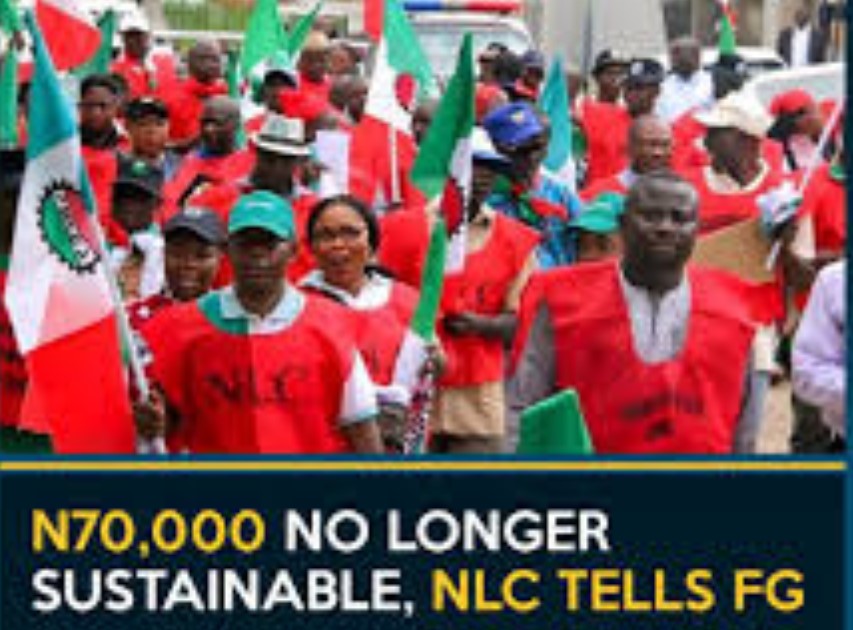
Nearly two years after Nigeria approved a new minimum wage of ₦70,000, many workers across the country are still waiting to benefit. Despite the policy being signed into law in 2024, at least 20 states have yet to fully implement the new salary structure, raising concerns among labour unions and employees.
The wage increase was introduced by Bola Ahmed Tinubu in July 2024, with the aim of easing the impact of inflation and rising living costs on workers. It replaced the previous ₦30,000 minimum wage, more than doubling the national baseline salary.
However, implementation has proven uneven, as each state government is responsible for adopting and funding the new pay structure.
⚠️ Labour Union Warns of Nationwide Action
The Nigeria Labour Congress has expressed growing frustration over the delays. Its president, Joe Ajaero, recently warned that states failing to comply could face mass protests scheduled for May Day 2026.
The union argues that prolonged delays have left many workers struggling, especially in regions where salaries remain unchanged despite rising economic pressures.
📊 States Yet to Fully Implement the Wage
Reports from labour groups and government sources indicate that the following states have not fully rolled out the ₦70,000 minimum wage across all sectors:
- Plateau
- Kebbi
- Sokoto
- Nasarawa
- Bayelsa
- Osun
- Ekiti
- Zamfara
- Benue
- Enugu
- Taraba
- Gombe
- Niger
- Bauchi
- Katsina
- Kaduna
- Cross River
- Yobe
- Oyo (still in delayed rollout)
- Imo (partial implementation)
In some of these states, the wage has not been approved at all, while others have only applied it to selected categories of workers.
💰 What Workers Are Currently Earning
In several regions—particularly at the local government level—many employees are still receiving the old ₦30,000 minimum wage or slightly higher amounts. Some state governments have introduced minor increases rather than fully adopting the new standard.
There are also disparities within states. For example:
- Kaduna, Gombe, and Borno have not fully implemented the wage for local government workers
- Imo, Cross River, and Yobe have been flagged for incomplete rollout
This uneven approach has created significant income gaps among workers performing similar roles in different parts of the country.
📈 States Paying Above the Benchmark
While some states continue to delay, others have gone beyond the ₦70,000 minimum:
- Lagos – approximately ₦85,000, with plans for further increases
- Ogun – around ₦77,000
- Kogi – about ₦72,500
- Gombe – roughly ₦71,500 (though not uniformly applied)
- Imo – exceeding ₦100,000 for certain categories
This variation highlights a growing disparity in wages across Nigeria, effectively creating multiple minimum wage standards depending on location.
🧩 Why Implementation Is Delayed
Several factors have contributed to the slow rollout:
- Financial challenges: Some state governments claim they lack the resources to sustain the increased wage bill
- Selective implementation: Priority is often given to state-level workers, while local government staff, teachers, and healthcare workers are overlooked
- Weak enforcement: Although the federal government sets the wage, states are responsible for implementation, leading to inconsistencies
⚖️ Growing Inequality Among Workers
The delay has resulted in a situation where workers performing similar duties earn vastly different salaries depending on their state:
- ₦30,000 in some areas
- ₦70,000 in others
- Over ₦70,000 in a few states
This disparity has fueled dissatisfaction and increased pressure on authorities to act.
🔍 What It Means Moving Forward
The ongoing situation underscores the challenges of implementing national policies in a federal system. While the new minimum wage was intended to provide relief, its uneven adoption has instead highlighted structural and economic differences between states.
With the Nigeria Labour Congress pushing for action, the coming months could be critical in determining whether states will comply—or face widespread protests.