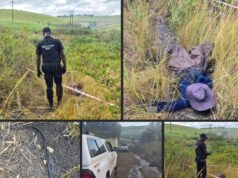


Fear and uncertainty continue to grip communities in Oriire Local Government Area of Oyo State following the abduction of pupils and teachers from schools in Ahoro-Esiele and Yawota.
Nearly a month after armed men invaded the schools and kidnapped pupils and staff, classrooms remain deserted while economic activities across the agrarian region have been severely disrupted.
In one of the affected schools, abandoned school bags, shoes, and exercise books remain scattered across the floor, serving as painful reminders of the day learning came to an abrupt halt.
According to a report by the Nigerian Tribune, a message still written on a classroom blackboard has become a haunting symbol of the tragedy.
The sentence, “I will be great,” was reportedly part of a handwriting lesson shortly before the attack. Weeks later, neither the pupils nor their teachers have returned to complete it.

Abduction Disrupts Livelihoods
The impact of the kidnappings extends far beyond the schools.
Communities that depend heavily on agriculture are witnessing declining productivity as many residents avoid travelling to their farms out of fear.
Cassava, yam, maize, and cocoa cultivation form the backbone of the local economy, but large portions of farmland now lie unattended.
Olanipekun, a farmer in Ahoro-Esiele, said he has stayed away from his cassava farm since the incident.
“The bush is where they took the children,” he said. “If I go to the farm and they are waiting, who will bury me? Who will feed my wife and my two children at home?”

Many farmers share similar concerns. Some have reduced their working hours, while others have stopped farming altogether.
The Oyo State Government has assured residents that efforts are ongoing to secure the release of the victims.
Markets Record Sharp Decline
The effects of the abductions are also being felt in local markets.
Traders say business activities have slowed significantly as residents limit movement and spending.
A food vendor in Yawota said her earnings have dropped sharply since the attack.
“People are not buying like before. Farmers are not bringing food. Those with money are keeping it because nobody knows what will happen next.”
Residents say the downturn has affected nearly every sector of the local economy.
Transport operators, artisans, and petty traders have all reported declining patronage.
Hunger and Hardship Worsen
For many families, the economic disruption has led to food shortages and increased hardship.
A resident, Jacob Agnes, described the worsening situation:
“We have been suffering serious hunger since the incident. Farmers have left their farms, and food sellers who normally bring food to the market have fled for their safety. Now we have nothing to eat. Many of us are still here because our relatives are still in the bush with the bandits.”
Parents say household incomes have fallen sharply, forcing some families to reduce the number of meals they eat each day.
Security personnel from the police and military have been deployed to the affected communities, while both the state and federal governments have reiterated their commitment to securing the release of the abducted victims.
Despite the increased security presence, fear remains widespread.
Roads that once bustled with farmers and traders are now largely deserted, while many shops close much earlier than usual.
As the victims remain in captivity, residents continue to hope for their safe return and the restoration of normal life in the affected communities.