

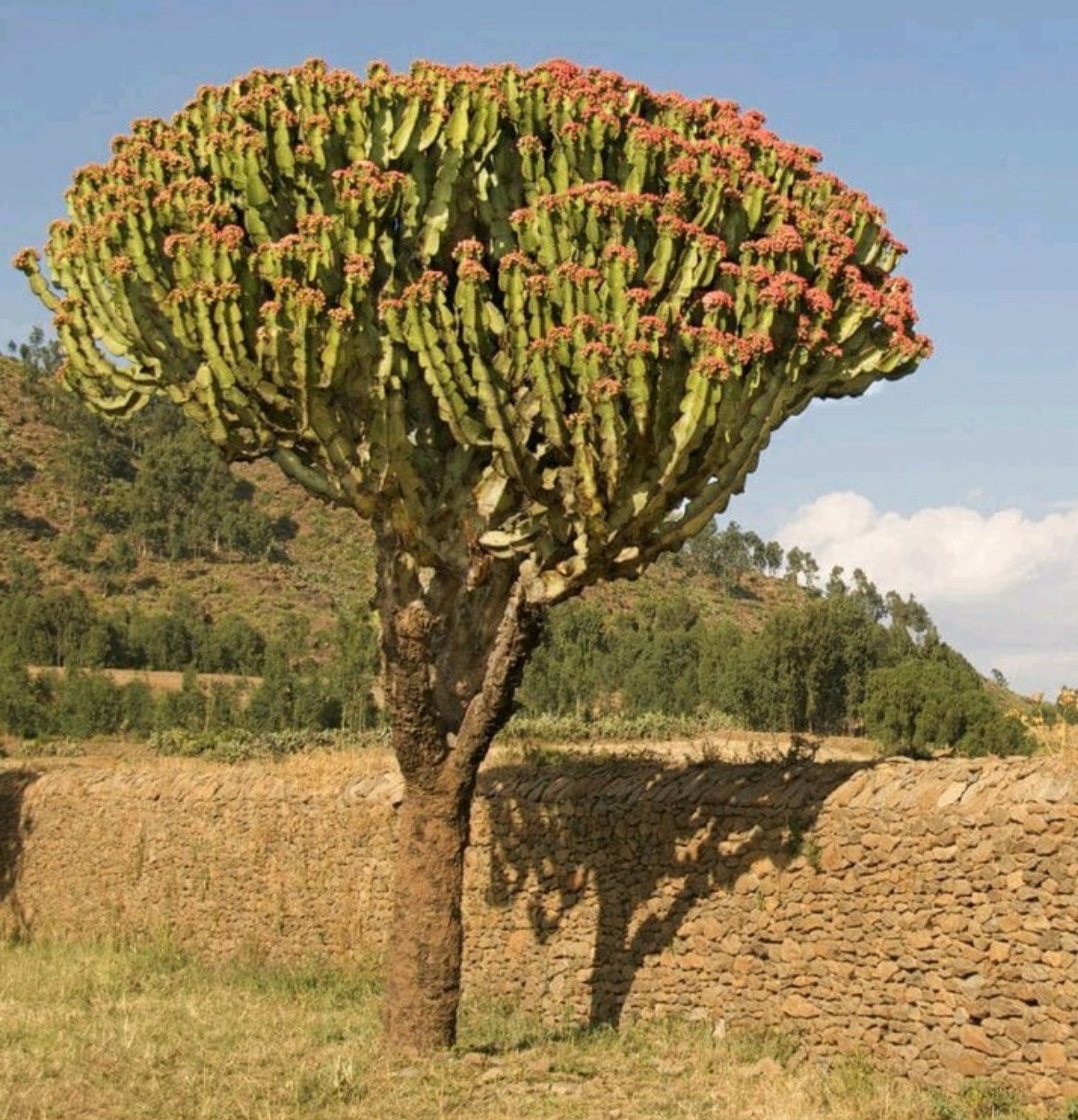
The plant highlighted is a species found in South Africa that is widely regarded for its highly toxic characteristics and harmful effects on human contact. It is described as having large, succulent-like leaves that resemble those of a prickly plant. These leaves contain a thick, milky latex substance that is considered extremely poisonous and highly irritating to the skin and eyes.
According to the description, contact with the latex can lead to severe physical reactions. When it touches the skin, it may cause blistering and intense irritation. If it enters the eyes, it can result in serious swelling and, in severe cases, blindness. The plant’s toxic properties make it dangerous to handle without protection, as even minimal exposure can produce strong adverse effects.
Despite its dangerous nature, the latex of the plant is noted to have a traditional use in fishing practices. It is stated that the latex contains a toxic compound referred to in the text as “rotonin,” which is used to stun fish. This process makes it easier for fish to be collected by hand once they become immobilized in water.
The preparation method described involves soaking grass in the latex substance, tying it to a stone, and throwing it into a body of water. After a short period, the fish are said to become incapacitated and float toward the surface. It is further explained that as long as the head and gills of the fish are removed before consumption, the fish can be eaten without the risk of poisoning, as the toxic elements of the plant are no longer present in the edible parts.
In addition to its toxic and practical uses, the plant also plays a role in the ecosystem. Its flowers are described as attractive to bees, butterflies, and other pollinators. During fruiting, the plant produces seed pods that burst open in a way that resembles popcorn popping, a mechanism that helps disperse seeds away from the parent plant.
Birds are also noted to interact with the plant, with several species using it for nesting. Woodpeckers and other cavity-nesting birds are mentioned as making use of hollow or inactive parts of the plant structure for shelter and breeding.