
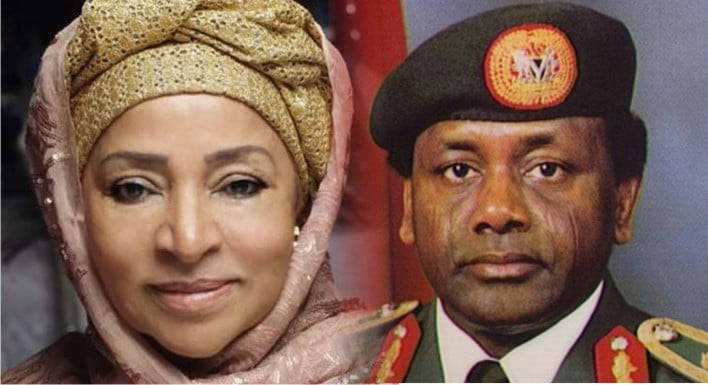
When General Sani Abacha died suddenly on June 8, 1998, at the age of 54, Nigeria erupted in a mixture of shock, celebration, and uncertainty. For many, it marked the end of one of the most repressive regimes in the country’s history. For Maryam Abacha, it marked the beginning of a life defined by profound silence.
As the First Lady of Nigeria from 1993 to 1998, Maryam had been a powerful, elegant, and often controversial figure. She was seen as the iron lady behind the throne — fiercely loyal to her husband, deeply involved in philanthropic activities through the Family Support Programme, and protective of the family’s image. But after Abacha’s death, she retreated almost completely from public life.
The Immediate Aftermath
In the chaotic hours and days following Abacha’s death, while the military scrambled to install General Abdulsalami Abubakar as the new Head of State, Maryam Abacha remained largely out of sight. She did not issue public statements, grant interviews, or appear at major events. This was in sharp contrast to expectations — many anticipated that the former First Lady would fight publicly to defend her husband’s legacy or at least address the nation.
Instead, she chose silence.

The Storm That Followed
Her silence became even more noticeable as the scandals began to unfold. The new government, under intense public pressure, launched investigations into alleged massive looting during the Abacha years. Billions of dollars were reportedly traced to foreign accounts linked to the family. Maryam and her children faced asset seizures, court cases, and intense media scrutiny both in Nigeria and abroad.
While some members of the Abacha family issued statements or fought legal battles, Maryam largely remained quiet. She rarely spoke to the press. She did not engage in the kind of public defence or counter-narrative that many expected from a woman who had once been one of the most visible figures in Nigerian politics.
Why the Long Silence?
Close observers and family associates have offered different interpretations over the years. Some say it was a deliberate strategy — a refusal to dignify what she saw as politically motivated attacks. Others believe it was rooted in grief, trauma, and a desire to protect what remained of her family’s privacy after the intense spotlight of the Abacha years.
Maryam Abacha had lost not only her husband but also the structured life of power she had known for five years. The sudden transition, the global corruption allegations, and the public vilification took a heavy toll. In choosing silence, she appeared to be drawing a line — refusing to become part of the national spectacle that followed her husband’s death.
A Legacy of Restraint
For over two decades, Maryam Abacha has maintained this dignified silence. She has lived a relatively private life, focusing on family and occasional philanthropic gestures away from the media glare. Even as debates about the Abacha era continue to rage — with some calling for the return of allegedly looted funds and others defending the regime’s infrastructure achievements — she has refused to be drawn into the fray.
Her long silence has become almost as defining as her time as First Lady. In a country where public figures often fight loudly for relevance or redemption, Maryam Abacha chose the path of quiet endurance.
Whether seen as strategic withdrawal or genuine grief, her decision to remain largely silent after June 8, 1998, continues to intrigue Nigerians. It stands as a powerful contrast to the noise that has surrounded her husband’s controversial legacy.
What do you think about Maryam Abacha’s long silence? Was it a wise strategy or a missed opportunity to defend her family’s name? Share your thoughts in the comment section.