
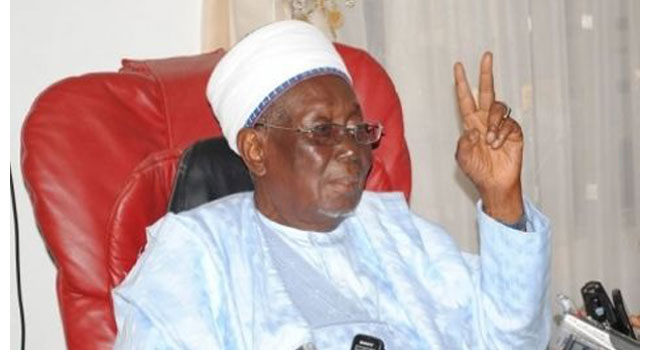
On April 20, 1996, General Sani Abacha took one of the most audacious and controversial decisions of his regime — the sudden deposition of the 18th Sultan of Sokoto, Alhaji Ibrahim Dasuki.
The action sent shockwaves across Nigeria and the Muslim world. For many, it was not just the removal of a traditional ruler — it was a direct assault on one of the most revered institutions in Northern Nigeria.
The Dramatic Fall of Sultan Dasuki
Security agents stormed the Sultan’s palace in Sokoto. Dasuki was arrested, stripped of his title, banished from the state, and later placed under house arrest in Kaduna. The very next day, Muhammadu Maccido was installed as the new Sultan.
The speed and ruthlessness of the operation left the nation stunned. The Sokoto Sultanate, which traces its lineage to the legendary Sheikh Usman dan Fodio, had never been treated with such disregard in modern Nigerian history.
Official Reason vs Real Motive
The military government publicly accused Sultan Dasuki of financial mismanagement and abuse of office, particularly concerning funds of the National Pilgrims Commission. They claimed he could not account for large sums meant for the Hajj.
However, those familiar with the inner workings of the regime knew the real reasons were deeply political:
– Perceived Disloyalty: Dasuki was seen as too independent and not fully submissive to Abacha’s authoritarian style.
– Absolute Control: Abacha was consolidating power and wanted unquestioning loyalty from all major traditional institutions. The Sultanate, being one of the most influential in the North, was a prime target.
– Strategic Message: By removing Dasuki, Abacha was sending a chilling warning to other emirs and traditional rulers — no one was untouchable.
National and International Reactions
The deposition triggered widespread outrage, especially in Sokoto and across the Muslim North. Many viewed it as an insult to the sanctity of the Caliphate. Protests erupted in parts of the region, though they were quickly suppressed under Abacha’s repressive machinery.
Islamic scholars, politicians, and traditional rulers condemned the move, though many did so cautiously out of fear. The incident further damaged Abacha’s already battered international image.
Aftermath and Legacy
Sultan Ibrahim Dasuki lived the rest of his life relatively quietly and passed away in 2016. His removal remains one of the most talked-about acts of the Abacha era — a clear demonstration of how the military dictator weaponised raw power against even the most respected traditional institutions.
The installation of Sultan Muhammadu Maccido (who later died tragically in the 2006 ADC plane crash) brought some stability, but the scar left by Dasuki’s deposition lingered for years.
A Defining Moment of the Abacha Years
The 1996 deposition of the Sultan of Sokoto stands as one of the boldest displays of authoritarianism during Abacha’s rule. It showed that no institution — no matter how sacred — was safe from his desire for total control.
Even today, the event is remembered as a low point in the relationship between Nigeria’s military rulers and its traditional heritage.
Source: Contemporary reports from Vanguard, Daily Trust, The Guardian, and historical accounts from 1996.