
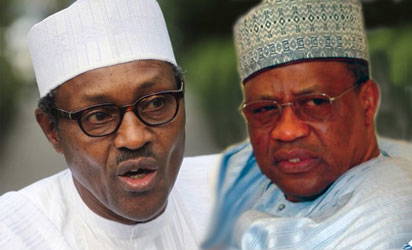
In September 1983, two ambitious Major-Generals —Muhammadu Buhari and Ibrahim Babangida — were already deep in plans to overthrow the civilian government of President Shehu Shagari. They had grown deeply disillusioned with what they saw as widespread corruption, economic mismanagement, and indiscipline under Nigeria’s Second Republic.
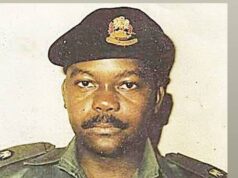
But there was one senior officer whose support they desperately needed: Major-General Domkat Bali, an officer senior to both of them by date of rank.
The Shagari Regime: A Government Under Siege
By late 1983, the Shehu Shagari administration was facing severe criticism from both the public and the military. Although President Shagari himself was widely regarded as a decent and incorruptible man, many of his ministers and political associates were accused of looting the national treasury with reckless abandon.
The economy had collapsed under the weight of falling oil prices. Nigeria, which had enjoyed massive oil wealth in the 1970s, was now experiencing acute hardship. There was high inflation, massive unemployment, and widespread poverty. The government’s attempt to manage the crisis through austerity measures only worsened public anger.
Corruption had become so brazen that it was openly discussed in markets, offices, and military barracks. Many senior officers believed the politicians had squandered the opportunity given to them when the military handed over power in 1979. To these officers, the Second Republic had become a failure within just four years.
Why the Military Was Hell-Bent on Truncating Democracy
The decision by some military officers to truncate the democratic experiment was not made lightly, but it was driven by several deep-seated factors:
– Economic Mismanagement: Many officers felt the civilian government had destroyed the economy through reckless spending and corruption. The oil boom of the 1970s had been squandered.
– Rampant Corruption: The scale of corruption under the Shagari government was alarming to the military. Senior officers believed the politicians were looting the country dry with no sense of restraint or patriotism.
– Indiscipline and Weak Leadership: The military viewed the civilian administration as weak and unable to enforce discipline. Many officers felt that only the military had the structure and will to restore order.
– Personal Ambition: Beyond national interest, some officers, including Buhari and Babangida, were also driven by personal ambition. Having tasted power during the long years of military rule (1966–1979), returning to the barracks was difficult for many of them.
– Perception of Failure: A significant number of officers believed the civilians had failed the test of governance. They argued that if the military could hand over power in 1979, it also had the right to take it back when the politicians performed poorly.
The Initial Rejection by Domkat Bali
Babangida first approached Bali to seek his consent for the coup. Bali, known for his calm and measured nature, initially refused. He told Babangida:
“Ibrahim, let’s give these politicians some more time to get their acts together.”
Babangida was disappointed but respected Bali’s position. He and Buhari agreed to temporarily shelve the plan.
The Christmas Meeting That Changed Everything
During the Christmas period of 1983, Bali visited Jos and met with Buhari, who was then the General Officer Commanding (GOC) of the 3rd Mechanized Division. Buhari used the opportunity to persuade Bali again. This time, Bali began to see reason and eventually gave his support for the coup.
Buhari was overjoyed. He immediately called Babangida with the good news. At that point, both men made a significant promise to Bali:
“Sir, if the coup succeeds, you will be the Head of State / President of Nigeria and we will work under you.”
The Coup and the Broken Promise
On December 31, 1983, the coup was successfully executed. However, when it came time to choose the new Head of State, Muhammadu Buhari emerged as the leader, while Babangida became Chief of Army Staff. Domkat Bali, despite being the most senior officer among the three and having given his support, was not made Head of State.
Many analysts believe Bali’s initial hesitation had cost him the ultimate position. The promise made in Jos did not materialise once power was seized.
A Defining Moment in Nigeria’s Military Politics
The 1983 coup marked the beginning of another long period of military rule in Nigeria. It also revealed the complex calculations, personal ambitions, and power plays that defined military interventions in Nigerian politics.
Domkat Bali went on to serve as Chief of Defence Staff under Babangida, maintaining a respected but relatively low-profile role. The story of how he almost became Head of State remains one of the most fascinating intrigues of that era.
Source: Historical narration by @omolokun1 (featured in the Instagram reel by current_andconvo).
What do you think about the promise made to Domkat Bali? Do you believe his initial hesitation truly cost him the presidency, or was the outcome inevitable? Share your thoughts in the comment section.