
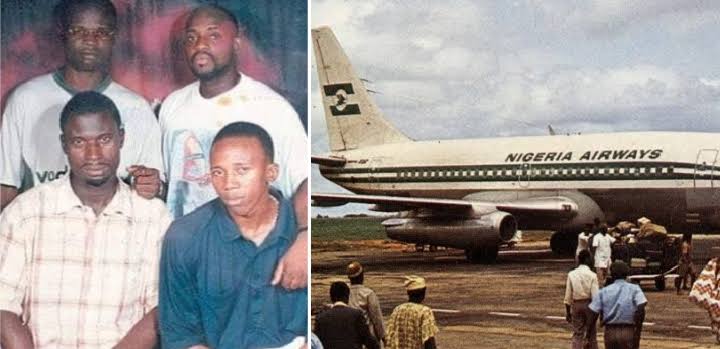
High above the Nigerian skies on 25 October 1993, four teenagers — barely out of their teens — stood up in the cabin of Nigeria Airways Flight 470. Guns and what they claimed were explosives in hand, they stormed the cockpit. “Fly this plane to Frankfurt, Germany, now!” they shouted at the terrified pilots. Among the 149 passengers were top Nigerian officials and even Rong Yiren, the Vice President of China. What began as a routine domestic hop from Lagos to Abuja had suddenly become one of the most audacious acts of political defiance in Nigeria’s turbulent history.
The boys were members of the self-styled Movement for the Advancement of Democracy in Nigeria (MADN). Their demand was simple yet explosive: annul the annulment. Recognise Moshood Kashimawo Olawale (MKO) Abiola as the rightful winner of the June 12 presidential election. In the chaotic cockpit, the pilot calmly explained the fuel limitations. The leader of the hijackers raged, but reality forced a detour. The plane would have to land in Niamey, Niger, for refuelling — setting the stage for a tense international standoff that would test the resolve of Nigeria’s military strongmen.
The Historical Setting: A Nation on the Brink
Nigeria in 1993 was a powder keg. The June 12 elections had been widely regarded as the freest and fairest in the country’s history. MKO Abiola, a wealthy Yoruba businessman and Social Democratic Party candidate, appeared to have defeated his rival. But military ruler General Ibrahim Babangida annulled the results, plunging the nation into crisis. Protests, riots, and a sense of betrayal swept the country. An interim government under Chief Ernest Shonekan was installed but lacked real power. Behind the scenes, General Sani Abacha — then Chief of Defence Staff — was the de facto strongman waiting in the wings.
The political upheaval created fertile ground for radical action. The four young hijackers — Richard Ogunderu (19), Kabir Adenuga, Benneth Oluwadaisi, and Kenny Rasaq-Lawal — represented a generation of frustrated youth unwilling to accept the theft of their democratic aspirations.
The Main Players
At the centre were the four teenage hijackers, idealistic (or reckless) enough to risk everything for democracy. They carried makeshift weapons and incendiary devices, declaring their allegiance to MADN and their goal of forcing Abiola’s installation.
On the Nigerian side, General Sani Abacha emerged as the decisive figure. Described in the reel and historical accounts as a “no-nonsense general,” Abacha refused to negotiate with the hijackers or allow Niger to refuel the plane easily. His hardline stance reflected the military’s determination to project strength amid domestic weakness.
The Nigerien government found itself caught in the middle, hosting the crisis on its soil. The interim Nigerian government under Shonekan was largely sidelined. Passengers, including high-profile figures, became unwilling pawns in a larger political drama.
Hidden Tensions and Motivations
Beneath the surface, the hijacking was not mere banditry but a desperate cry against military dictatorship. The annulment of June 12 had shattered public faith in the transition to civilian rule. The hijackers hoped international attention would pressure the regime. They threatened to blow up the plane within 72 hours if demands were not met.
Abacha’s motivations were rooted in maintaining order and military authority. Any sign of weakness could embolden further unrest. The crisis also highlighted Nigeria’s complex regional relations — violating or pressuring Niger’s sovereignty was a calculated risk. The boys’ choice of Frankfurt suggested they sought European or international mediation, but low fuel doomed that plan.
The Critical Standoff in Niamey
After landing at Diori Hamani International Airport in Niamey, the hijackers took control of communications. They announced their political demands publicly. Negotiations dragged on for days. The Nigerian government, with Abacha at the helm, firmly rejected concessions. Pressure mounted on Niger not to assist the hijackers.
On 28 October, after a protracted hostage situation, Nigerien security forces stormed the aircraft. One crew member was killed during the operation; several others were injured. The four hijackers were overpowered and arrested.
Behind Closed Doors: Calculations and Resolve
Abacha’s refusal to yield was characteristic of his later rule (he seized power fully weeks later in November 1993). The military viewed the hijackers as destabilising elements tied to pro-democracy agitation. Allowing a successful hijacking could set a dangerous precedent. By deferring the resolution to Niger while withholding support for refuelling, Nigeria maintained plausible deniability while projecting uncompromising strength.
For the hijackers, the act was born of youthful idealism mixed with the political despair of the era. Their three-day ordeal turned a domestic flight into an international incident, shining a global spotlight on Nigeria’s stolen mandate.
The Consequences
The hijackers spent nearly a decade in Nigerien prison before eventual release. The incident did not immediately restore democracy — Abacha’s regime became one of Nigeria’s most notorious military dictatorships, marked by repression and international isolation until his death in 1998. Abiola died in 1998 while still detained.
The event underscored the fragility of Nigeria’s democratic experiment and the willingness of its youth to take extreme measures. It also highlighted the risks of military rule and the challenges of regional diplomacy. A Netflix film, Hijack ’93, later dramatised the story, bringing renewed attention to this largely forgotten chapter.
Why This Story Still Matters Today
In an era of political disillusionment, youth activism, and debates over democratic backsliding, the 1993 hijacking remains a potent symbol. It shows how far some are willing to go when they feel their voices are silenced. Abacha’s iron-fisted response foreshadowed the authoritarian style that defined his rule — effective in the short term for crisis management but disastrous for long-term stability and human rights.
The saga also reminds Nigerians of the enduring legacy of June 12 and the high cost of stolen mandates. As the country continues to grapple with governance challenges, leadership accountability, and youth frustration, the story of Flight 470 serves as both cautionary tale and testament to the power of bold, if flawed, resistance. In the end, the teenagers’ dramatic stand did not topple the regime immediately, but it etched their names — and the cry for democracy — into Nigeria’s complex historical narrative.