
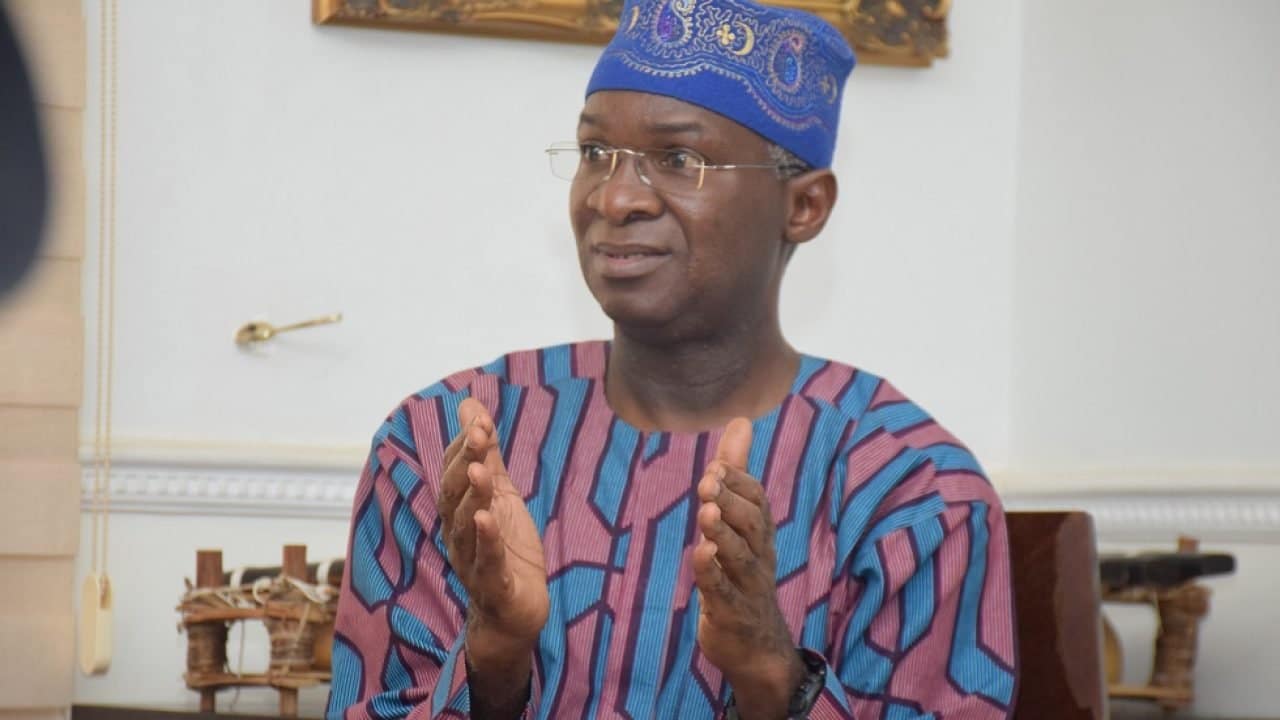
The relationship between former President Olusegun Obasanjo and former Lagos State Governor Babatunde Raji Fashola was generally cordial, but it faced a brief but intense strain between 2007 and 2008 over a dispute involving seized vehicles.
The incident occurred shortly after Fashola assumed office as Governor of Lagos State in May 2007. At the time, Obasanjo had just left office and was deeply involved in large-scale farming. Some of the vehicles belonging to his farm reportedly violated traffic regulations in Lagos and were impounded by the state’s traffic management agency (LASTMA).
Obasanjo was said to have been displeased with the development. In what was widely interpreted as a retaliatory move, he ordered the seizure of some Lagos State government vehicles. These vehicles were reportedly parked at border areas between Lagos and Ogun State, effectively holding them as leverage. The action created significant tension and drew public attention, as it involved a former President and a sitting governor.
How the Matter Unfolded
The seizure of the Lagos State vehicles was seen by many as Obasanjo flexing his influence, especially since he still wielded considerable political weight even after leaving office. At the time, Fashola was still relatively new in office and was focused on restoring order and enforcing traffic laws in Lagos, which had become notoriously chaotic.
The development created an awkward situation. While the federal government under President Umaru Musa Yar’Adua maintained a low profile, the incident highlighted the delicate balance of power between a former president and a state governor, especially one from a different political background.
How It Was Resolved
According to reports at the time, the matter was eventually resolved amicably through behind-the-scenes dialogue. Both sides reportedly reached an understanding, and the seized vehicles were eventually released. The exact details of the settlement were never made public, but the issue gradually died down without escalating into a full-blown political crisis.
Many observers believed that the quick resolution was helped by the fact that both men, despite their differences, shared a mutual respect for institutional order. Neither wanted the matter to spiral into a major political embarrassment.
The Relationship Between Obasanjo and Fashola
Before the incident, Obasanjo and Fashola did not have a particularly close relationship. Fashola had emerged as governor under the platform of the Action Congress (AC), which was in opposition to Obasanjo’s Peoples Democratic Party (PDP) at the federal level. However, both men were known for their strong personalities and commitment to governance.
The vehicle seizure saga briefly tested their relationship, but it did not lead to long-term animosity. Over the years, both men have maintained a respectful distance while occasionally crossing paths at national events. Fashola, in particular, has often spoken respectfully about Obasanjo’s role in Nigeria’s democratic journey, while Obasanjo has generally avoided direct public attacks on Fashola.
Recent Meeting in Lagos
Years after the incident, both men have demonstrated that political disagreements do not necessarily translate into personal enmity. In a recent public event in Lagos, former President Obasanjo and former Governor Fashola were seen interacting warmly. The two leaders were captured in friendly conversation, exchanging pleasantries and appearing relaxed in each other’s company.
Their cordial meeting was widely welcomed by many who viewed it as a sign of political maturity. It showed that despite past disagreements, both men had moved on and were willing to maintain a civil relationship in the interest of national unity.
Watch the video of their meeting here.
Conclusion
The 2007–2008 vehicles seizure incident remains one of the notable political face-offs between a former president and a sitting governor in Nigeria’s Fourth Republic. While it created momentary tension, the quick and amicable resolution prevented it from degenerating into a major crisis.
Today, the relationship between Obasanjo and Fashola stands as a reminder that political disagreements in Nigeria, when handled maturely, do not have to destroy personal or institutional relationships.
What do you think about this incident? Do you believe Obasanjo was justified in his reaction, or was it an overreach? Share your thoughts in the comment section.