
The initiative is implemented within the framework of the national program “Taza Kazakhstan” and is considered as one of the key tools for the formation of the modern ecological agenda of the country.
In the course of direct inclusion, the Head of State outlined the strategic importance of the project, emphasizing its dual orientation – the practical improvement of territories and the formation of the ecological culture of society. According to the President, the greening of settlements is a long-term investment in the health of the nation and a sustainable future.

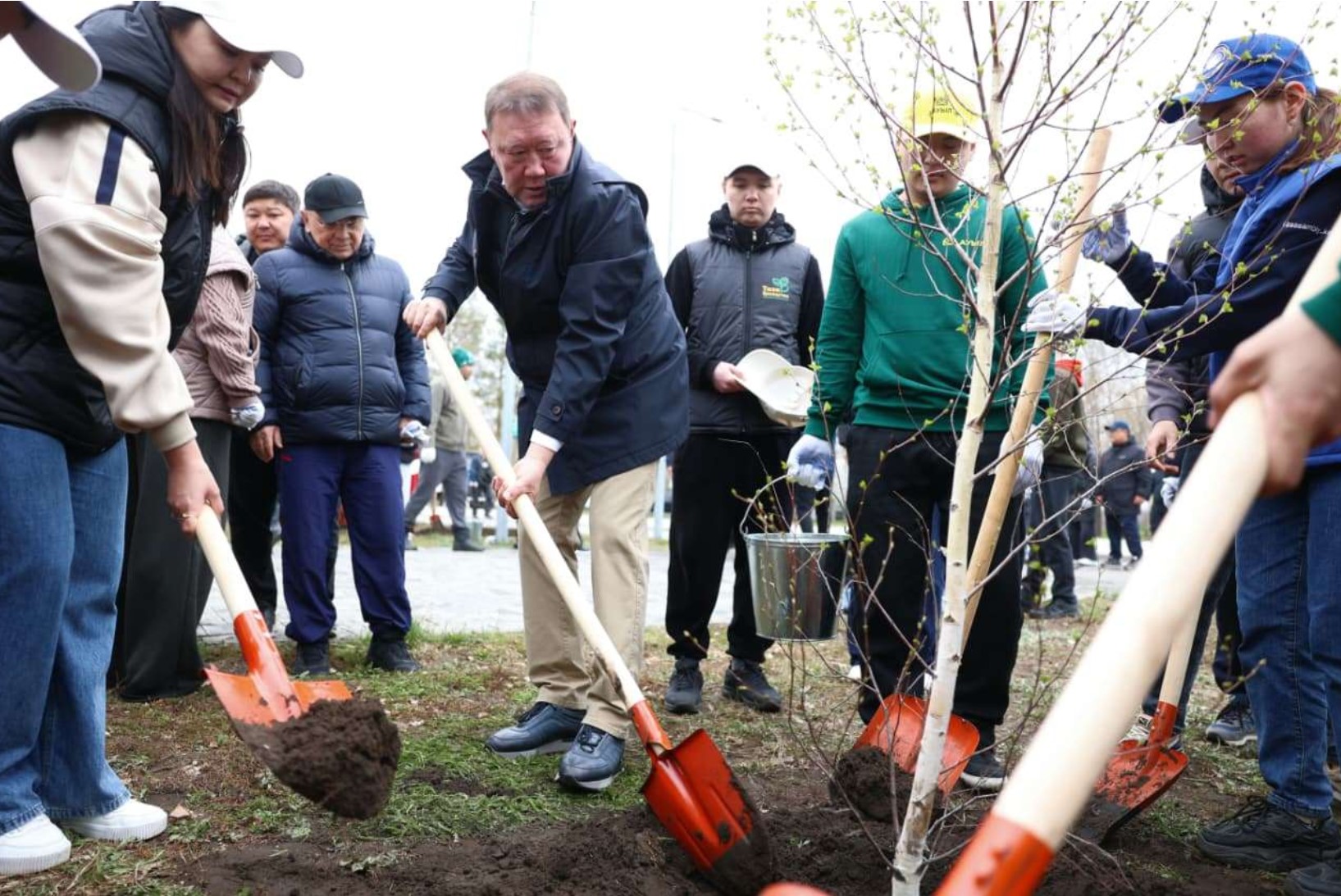
The central platform of the action in the region was Triathlon-PKostania Park – one of the points of attraction of the urban environment, where the environmental initiative acquired the widest possible public coverage. Here, representatives of the authorities, business, the volunteer movement and the residents of the city took part in the planting of trees. The work was headed by the akim of the region Kumar Aksakalov. Participants include representatives of the industrial sector, including enterprises of the automotive industry and light industry, as well as agricultural producers.
“On behalf of the President, we in the region are not just conducting actions, but building systemic work. “Taza Kazakhstan” for us is a real result: clean streets, new trees, landscaped yards. We want the residents of the Kostanay region to see these changes every day and become part of these changes ourselves,” the head of the region said.
Residents of the region support environmental initiatives and note real changes.
“The city is really getting cleaner and cozy. It is clear that the work is not going on one, but constantly: new trees appear, courtyards are being improved. I want us to take care of what is being created, ”said a resident of Kostanay Dana Tokzhanova.
The symbolic and at the same time practical result of the action was the planting of about 12 thousand trees in just one day. At the same time, as emphasized at the regional level, the key priority remains not only the scale of the plantings, but also the subsequent systemic care of green spaces.

In a broader context, the environmental transformation of the region has already demonstrated tangible results. In 2024-2025, 40.3 billion tenge was allocated for the implementation of specialized projects. During this period, more than 400 public spaces were landscaped, more than 250 children’s and sports grounds were created, about 600 unauthorized landfills were eliminated and more than 1 250 emergency facilities were dismantled. In parallel, about 277 thousand trees were planted, 1.3 thousand hectares of territories were cleaned and about 50 thousand tons of waste were removed.
A separate emphasis is placed on the development of public spaces as an element of a high-quality urban environment. 80 such facilities have already been formed in the region, and in 2026 it is planned to implement another 25 projects. Over the past three years, an additional 94 parks and squares have been created, which has significantly expanded the infrastructure for recreation and leisure.
The integrated renovation also affects the housing stock. In the region, the roof and facades of 180 apartment buildings were repaired. The plans include the further landing of 77 thousand seedlings, repair of the roof and facades of 63 more houses, the installation of 31 new children’s and sports grounds, as well as the continuation of work on the demolition of dilapidated housing.
The high involvement of the population and business confirms the stability of the formed ecological culture: more than 105 thousand people and about 1.9 thousand enterprises took part in sanitary events.
Thus, the implementation of the Taza Kazakhstan initiative in the Kostanay region goes beyond individual actions, forming a systematic approach to the development of the territory. We are talking not only about environmental changes, but also about the transformation of the urban environment, improving the quality of life and strengthening the long-term investment attractiveness of the region.