

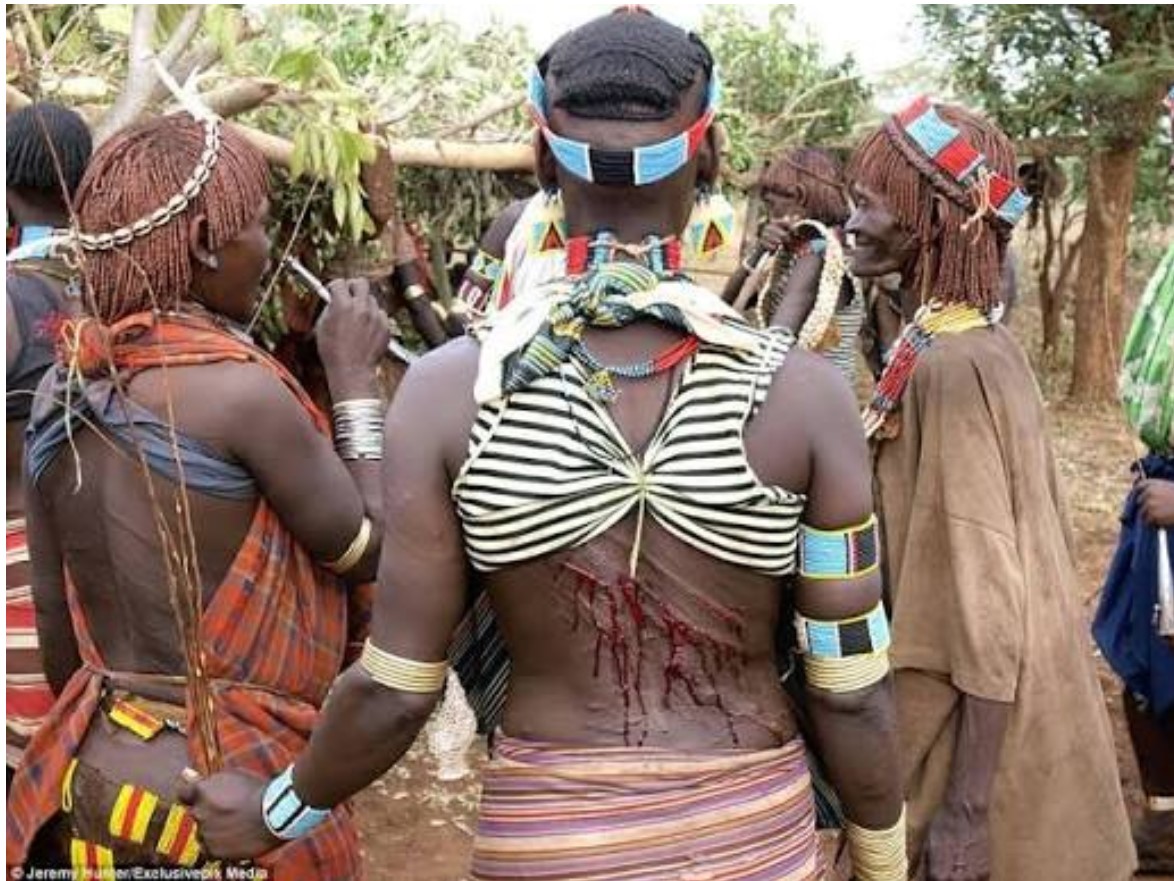
Among the Hamar tribe of southern Ethiopia, a striking ritual tied to a young man’s passage into adulthood is quietly being reinterpreted by a new generation. During the famed “bull-jumping” ceremony, women relatives of the initiate voluntarily ask to be whipped, an act that, to outsiders, appears shocking.
But within the community, the meaning runs deeper than pain. The ritual is less about submission and more about social currency. Women who endure the lashes demonstrate loyalty to the initiate, often a brother or close kin.
The scars they carry afterward are not hidden; they are displayed with pride, serving as lifelong proof of solidarity. In a society where mutual dependence defines survival, such a visible commitment strengthens kinship bonds that extend far beyond the ceremony itself.
What is rarely discussed, however, is how younger Hamar women are reframing the practice. Increasing exposure to education, tourism, and digital storytelling has sparked subtle shifts.
Some now see participation as a choice tied to identity rather than obligation. Others question whether symbolic alternatives could preserve meaning without physical harm.
Anthropologists note that rituals like these often evolve rather than disappear. Among the Hamar, the conversation is no longer just about tradition, but about agency, who chooses, who benefits, and how culture adapts without losing its core.
In that tension lies a more nuanced story: not of coercion, but of a community negotiating continuity in a rapidly changing world.