

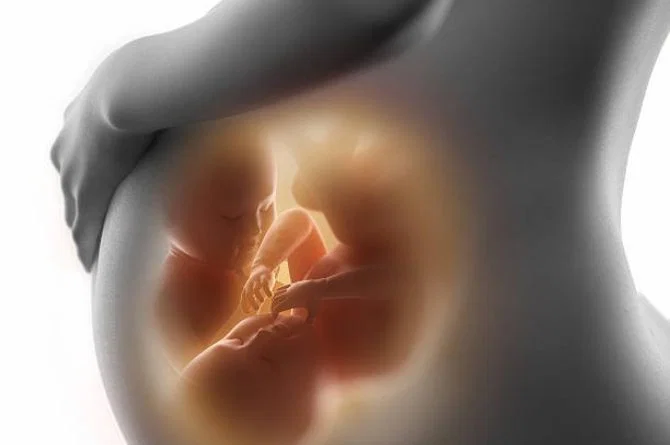
For most people, pregnancy seems like a straightforward biological process: an egg is fertilized, implants in the uterus, and the body immediately begins preparing to support the developing baby. Once that happens, the chances of becoming pregnant again are considered virtually impossible.
However, medical science has documented a handful of extraordinary cases where a woman became pregnant while she was already expecting another baby. This extremely rare phenomenon is known as superfetation, and it remains one of the most fascinating exceptions in human reproduction.
Superfetation occurs when a second pregnancy begins after an initial pregnancy has already been established.
In a typical pregnancy, hormonal changes prevent the ovaries from releasing additional eggs. The body essentially switches into pregnancy mode, shutting down the processes necessary for another conception to occur.
In rare instances, however, a woman may release another egg after becoming pregnant. If that egg is fertilized and successfully implants in the uterus, a second fetus begins developing alongside the first.
The result is two babies growing in the womb at the same time but conceived days or even weeks apart.
The human body has several powerful biological mechanisms that make superfetation extraordinarily unlikely.
Once a pregnancy is established, hormones such as progesterone and human chorionic gonadotropin (hCG) suppress ovulation. Without the release of another egg, a second conception cannot take place.
During pregnancy, cervical mucus thickens and forms a protective mucus plug. This barrier helps shield the developing fetus from infection and makes it extremely difficult for sperm to travel into the uterus.
After implantation, the uterine lining undergoes significant changes to support the growing embryo. A newly fertilized egg would face considerable challenges finding a suitable place to implant and continue developing.
For superfetation to occur, all of these natural safeguards would need to fail or be bypassed.
In most reported cases, superfetation is discovered during ultrasound examinations.
Doctors may notice that two fetuses are developing at noticeably different stages that cannot be explained by normal differences in growth. One fetus may appear several days or weeks younger than the other despite sharing the same womb.
Additional medical evaluations are usually conducted to rule out other explanations, such as growth restriction or developmental delays.
Although babies resulting from superfetation are often carried together and born on the same day, they are not technically traditional twins.
Traditional twins originate from the same ovulation cycle, whether through one fertilized egg splitting into identical twins or two eggs being fertilized during the same reproductive cycle.
In superfetation, the babies are conceived during separate ovulation events. They are therefore siblings who happen to share the womb at the same time.
Managing a superfetation pregnancy can be complex.
Because the babies are at different stages of development, doctors must carefully monitor their growth and determine the safest time for delivery. The older fetus may be ready for birth while the younger fetus still requires additional time to mature.
Medical teams often face the difficult task of balancing the health needs of both babies, particularly if complications arise.
In many documented cases, delivery is performed through Caesarean section to maximize safety.
Superfetation is considered one of the rarest reproductive events in humans.
Only a very small number of medically documented cases have been reported worldwide. Some specialists believe additional cases may have occurred without being recognized, particularly before modern ultrasound technology became widely available.
Several reported instances have involved fertility treatments such as in vitro fertilization (IVF), although spontaneous cases have also been documented.
The phenomenon has provided researchers with valuable insights into human reproduction and the complex hormonal systems that regulate pregnancy.
While superfetation remains exceptionally uncommon, it demonstrates that biological processes are not always absolute. Rare exceptions can occur even when multiple safeguards exist to prevent them.
For nearly all women, becoming pregnant while already pregnant is effectively impossible. The body is designed to prevent such an occurrence through a combination of hormonal, physical, and reproductive mechanisms.
Yet superfetation serves as a remarkable reminder that nature occasionally defies expectations. Though exceedingly rare, these unusual pregnancies continue to fascinate doctors, researchers, and the public alike, offering a glimpse into one of the most extraordinary exceptions in human biology.