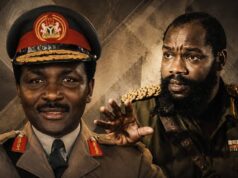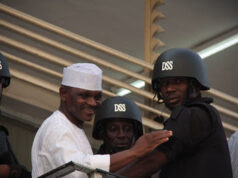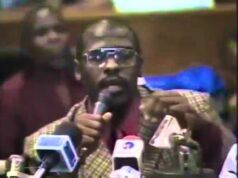

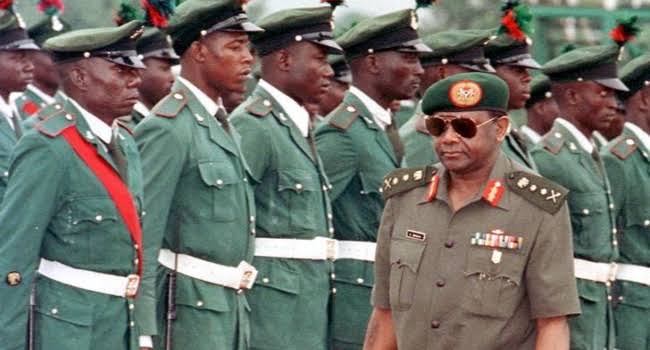
The Presidential Guards Brigade (often referred to as the Brigade of Guards) is one of Nigeria’s most elite and strategically important military units. Tasked with protecting the President, the Presidential Villa, and key government installations, its loyalty or betrayal has often proven decisive in military coups and power transitions.

Because of its proximity to power and control of critical access points, commanders and officers of the Presidential Guards Brigade have repeatedly played pivotal roles in overthrowing or installing leaders.
Key Instances of Presidential Guards Brigade Involvement
– 1975 Coup Against General Yakubu Gowon
Colonel Joseph Nanven Garba, Commander of the Presidential Guards Brigade and a close confidant of Gowon, was central to the bloodless coup that removed Gowon while he was attending an OAU summit in Uganda. Garba’s control of the elite unit made the takeover smooth and largely non-violent. He announced the coup on radio, paving the way for General Murtala Muhammed’s emergence as Head of State.
– 1983 Coup Against President Shehu Shagari:
Elements of the Presidential Guards Brigade were involved in the December 31, 1983 coup that ended the Second Republic. Although some Guards officers initially resisted, key negotiations and internal dynamics led to the unit’s eventual compliance, allowing Major General Muhammadu Buhari to seize power.
– 1985 Palace Coup Against Buhari
Officers linked to the Presidential Guards Brigade and other strategic units supported Major General Ibrahim Babangida’s bloodless coup on August 27, 1985. The Guards’ strategic positioning helped ensure minimal resistance.
– 1993 Takeover: From Shonekan to Abacha
Colonel Lawan Gwadabe (associated with the National/Guards structures) played a direct role in removing the Interim National Government headed by Chief Ernest Shonekan on November 17, 1993. Troops under his influence surrounded Aso Rock, leading to Shonekan’s resignation and General Sani Abacha’s ascension.

Broader Pattern and Significance
The Presidential Guards Brigade has historically been a “kingmaker” unit because:
– It controls physical access to the President and Aso Rock.
– Its commander is usually a highly trusted officer.
– It possesses significant firepower and rapid response capability in the capital.
Success in any major power grab in Nigeria has often depended on either neutralizing or securing the loyalty of the Presidential Guards Brigade . This explains why successive leaders have paid special attention to who commands the unit.
In the current democratic dispensation (post-1999), the Presidential Guards Brigade continues its traditional role of protecting the President and the Villa, but its direct involvement in leadership changes has diminished due to civilian rule and stronger democratic institutions. However, its strategic importance remains — any serious instability in Abuja would likely involve attempts to influence or control this elite formation.
The repeated historical pattern shows that in Nigeria’s military era, control of the Presidential Guards Brigade was often more decisive than numbers or firepower elsewhere. It remains one of the most watched and sensitive units in the Nigerian Army to this day.