
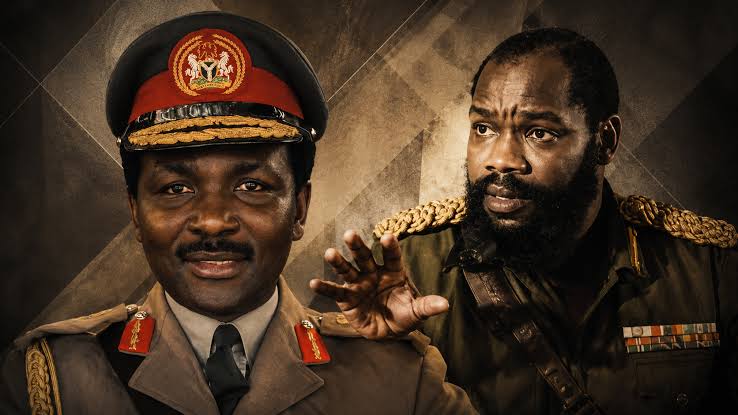
One of the deepest cracks that led Nigeria into the Civil War (1967–1970) was not just ethnic tension, but a fierce disagreement over military hierarchy and legitimate succession. This fundamental issue, recently highlighted by former Head of State General Abdulsalami Abubakar (rtd), centred on Lieutenant Colonel Chukwuemeka Odumegwu-Ojukwu’s refusal to accept Lieutenant Colonel Yakubu Gowon as Head of State.
The Hierarchy Dispute
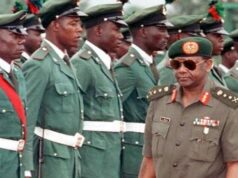
After Major General Johnson Aguiyi-Ironsi was killed during the July 1966 counter-coup in Ibadan, a power vacuum emerged at the top of the Nigerian military. Ojukwu, then Military Governor of the Eastern Region, took a firm and principled stand: succession must follow strict military hierarchy.
He argued that in the absence or death of Aguiyi-Ironsi, the next in command should have been Brigadier Babafemi Ogundipe, the Chief of Staff, Supreme Headquarters, who was clearly senior to Gowon. Ojukwu maintained that promoting or accepting a junior officer like Gowon as Head of State violated military protocol and amounted to a Northern power grab.
This position was not hidden. Ojukwu made it public through statements and broadcasts. He refused to pledge allegiance to Gowon, creating a serious constitutional and military crisis. The refusal went beyond personal ego — it reflected deep distrust between the regions and the belief that due process had been thrown aside.
Escalation to War
The disagreement over who had legitimate authority paralysed national reconciliation efforts. The Aburi Accord of January 1967, held in Ghana, attempted to resolve the impasse, but implementation failed. Ojukwu insisted on “On Aburi We Stand,” while the Federal Government under Gowon moved to assert central control by creating more states, which Ojukwu saw as further marginalisation of the East.
With trust completely broken, Ojukwu declared the Republic of Biafra on May 30, 1967. The Nigerian Civil War began shortly after — one of the deadliest conflicts in African history.
Lasting Historical Significance
General Abdulsalami Abubakar’s recent revelation throws fresh light on this often oversimplified chapter. It shows that the road to war was not driven solely by ethnicity or oil, but also by a rigid insistence on military seniority and legitimate succession. Ojukwu’s refusal to recognise Gowon was rooted in principle, yet it accelerated the chain of events that led to tragedy.
Brigadier Babafemi Ogundipe, the man Ojukwu believed should have taken over, later left the country and lived in the UK, largely staying out of the political limelight.
This hierarchy dispute remains a powerful lesson in how rigid adherence to protocol — even when well-intentioned — can become a catalyst for national catastrophe when mutual trust has already collapsed.
Sources:
– General Abdulsalami Abubakar’s recent book, ‘Call to Duty’ and historical reflections
– Documented records of pre-Civil War military correspondence and Ojukwu’s public broadcasts
– Archival accounts of the Aburi Accord and 1966–1967 succession crisis
What do you think? Was Ojukwu right to insist on strict military hierarchy, or did his position make war inevitable? Share your thoughts in the comment section.