
Abacha vs MKO: The Deadly Power Struggle That Defined Nigeria’s Darkest Years
 Follow on Google News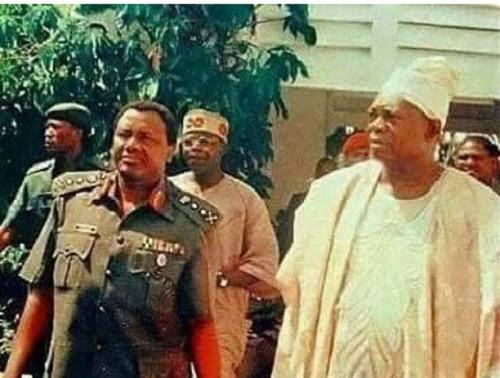
In the turbulent 1990s, two larger-than-life figures dominated Nigeria’s political landscape — General Sani Abacha and Chief Moshood Kashimawo Olawale Abiola (MKO). Their confrontation became one of the most consequential and tragic power struggles in the nation’s history — a fight that ended in the deaths of both men and left deep scars on Nigeria’s democracy.
Abacha, the iron-fisted military dictator, and MKO, the charismatic billionaire and winner of the annulled June 12, 1993 presidential election, represented two opposing forces: raw military power versus the will of the people.
The Historical Setting: The June 12 Crisis
The story begins with the presidential election of 12 June 1993. Widely regarded as Nigeria’s freest and fairest election at the time, MKO Abiola of the Social Democratic Party (SDP) defeated his rival Bashir Tofa. Nigerians turned out in large numbers, hoping the vote would end years of military rule and usher in the Third Republic.
But General Ibrahim Babangida’s military government annulled the results, triggering a national crisis. Abiola declared himself president, leading to his eventual arrest. When Abacha seized power in a November 1993 palace coup, he inherited — and intensified — the confrontation with MKO.
The Main Players
– General Sani Abacha: The ruthless military head of state (1993–1998). Known for his iron grip, suppression of dissent, and alleged massive looting of state resources. He viewed Abiola as a direct threat to his regime.
– Chief M.K.O. Abiola: The wealthy Yoruba businessman, philanthropist, and politician. Winner of the June 12 election. Charismatic and widely loved, especially in the Southwest, he became the symbol of the struggle for democracy.
– Other Key Figures: Babangida (who annulled the election), human rights activists, pro-democracy groups, and international pressure from the West.
The Hidden Tensions and the Fight to the Death
Abacha saw MKO not just as a political rival but as an existential threat. Abiola’s massive popularity, financial resources, and international support made him dangerous. Abacha responded with brute force — jailing Abiola in 1994 after he declared himself president at Epetedo in Lagos.
MKO was held in solitary confinement for years, cut off from family and the outside world. Abacha’s regime became notorious for human rights abuses, the execution of the Ogoni Nine (including Ken Saro-Wiwa), and the imprisonment of many pro-democracy activists.
Behind the scenes, Abacha allegedly offered deals to Abiola to renounce his mandate, but MKO refused, famously declaring he would not compromise on the will of the people. The battle became deeply personal and ideological — military dictatorship versus the democratic mandate.
The Critical Moments and Tragic Endings
In June 1998, Abacha suddenly died in controversial circumstances (officially a heart attack). Many Nigerians celebrated in the streets, seeing it as divine intervention.
Just weeks later, on 7 July 1998, MKO Abiola also died while still in detention. Official reports said he suffered a heart attack, but suspicions of foul play have persisted for decades. His death, coming so soon after Abacha’s, fuelled conspiracy theories and deepened national grief.
The two men who had been locked in a deadly power struggle were both gone — leaving Nigeria to begin the long road back to civilian rule in 1999.
The Consequences
Abacha’s death paved the way for General Abdulsalami Abubakar’s short transition government, which handed over power to civilian President Olusegun Obasanjo in 1999. MKO’s death became a rallying cry for democracy advocates and a permanent stain on the military era.
June 12 was eventually recognised as Democracy Day, and MKO was posthumously awarded the Grand Commander of the Federal Republic (GCFR) — Nigeria’s highest honour.
Why This Story Still Matters Today
The Abacha-MKO rivalry remains one of the most dramatic chapters in Nigeria’s political history. It symbolises the high cost of the struggle for democracy and the dangers of military rule. Abiola’s sacrifice and Abacha’s tyranny continue to shape how Nigerians view leadership, justice, and the sanctity of the vote.
In an era where democratic gains are still being defended, their story serves as a powerful reminder: the will of the people can be delayed, but it cannot be permanently suppressed. The fight between raw power and popular mandate defined a generation — and its echoes are still felt today.
The Instagram reel captures this intense rivalry with stark honesty, reminding a new generation of the heavy price paid for the democracy we enjoy today.
Two titans. One nation. A fight to the death that changed Nigeria forever.
June 12 will never be forgotten. MKO’s mandate lives on in Nigeria’s democratic journey.





Comments
0 comments