
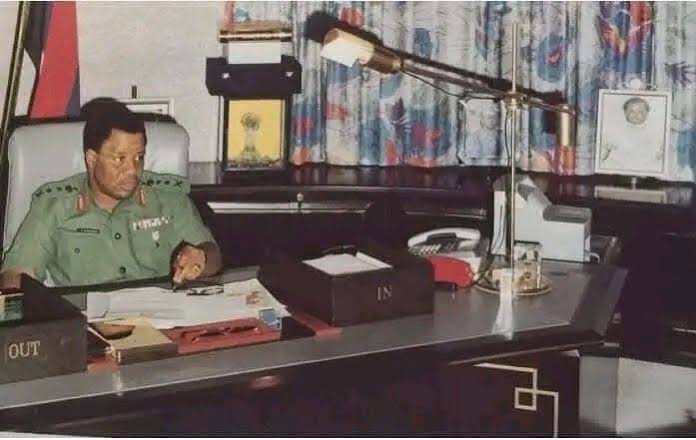
The August 27, 1985 coup that removed General Muhammadu Buhari from power succeeded with remarkably minimal bloodshed, largely due to the coordinated efforts of two ambitious and influential officers: Major-General Ibrahim Babangida and Major-General Sani Abacha.
Babangida emerged as the new Head of State, while Abacha was immediately appointed Chief of Army Staff — the most powerful position in the military after the presidency itself. For the first few years, the two men maintained a functional and often effective working relationship. Babangida brought political charisma and strategic cunning, while Abacha provided iron discipline and unwavering loyalty to the new regime. Together, they stabilised the government after Buhari’s short but austere rule.
This partnership was not built on deep personal friendship but on mutual interest. Both had risen through the ranks during a turbulent period of Nigerian military politics, and both understood the importance of unity at the top to prevent counter-coups or internal rebellion. For several years, they successfully managed the affairs of state, navigating economic reforms, political transitions, and internal military dynamics with relative cohesion.
Also Read: Babangida’s Calculated Move: Why He Stopped Abacha From Bringing His Own Troops During the 1985 Coup
The Cracks Begin to Show
However, as Babangida’s eight-year rule progressed — particularly during the prolonged and controversial transition to civilian rule in the late 1980s and early 1990s — the relationship began to show signs of strain. Abacha, known for his preference for firm control and decisive action, reportedly grew impatient with Babangida’s style of endless political manoeuvring, shifting deadlines, and what some described as “Maradona politics.”
The tension reached its peak during the June 12, 1993 presidential election crisis. Babangida’s decision to annul the election, widely believed to have been won by Chief M.K.O. Abiola, created massive national unrest. When Babangida eventually “stepped aside” in August 1993 and installed an Interim National Government under Chief Ernest Shonekan, Abacha remained in the shadows as Chief of Defence Staff — quietly positioning himself for the next move.
The Inevitable Rivalry
By November 17, 1993, Abacha had moved decisively. He removed the Interim Government and declared himself Head of State. The once-powerful alliance between Babangida and Abacha had officially fractured. What began as a partnership forged in the 1985 coup had evolved into open rivalry, especially as Babangida’s influence waned and Abacha consolidated absolute power.
This shift from allies to competitors reflected a familiar pattern in Nigerian military politics: loyalty among coup plotters often lasted only as long as power was being shared. Once the ultimate prize was within reach, personal ambition usually prevailed.
The 1985 coup, which brought both men to prominence, succeeded because of their coordination. Yet that same success planted the seeds of future tension. Babangida’s political gamesmanship clashed with Abacha’s preference for iron-fisted control. Their eventual parting of ways would define the final years of military rule in Nigeria, culminating in Abacha’s authoritarian regime and Babangida’s controversial legacy.
The story of Babangida and Abacha remains one of the most revealing chapters in Nigeria’s modern history — a powerful illustration of how alliances built on convenience can quickly dissolve when power is at stake.
Source: Historical accounts of the 1985 coup and subsequent military transitions in Nigeria.