
Expert: Disu’s Police Shake-Up Pushes Officers to Frontlines to Tackle Crime
 Follow on Google News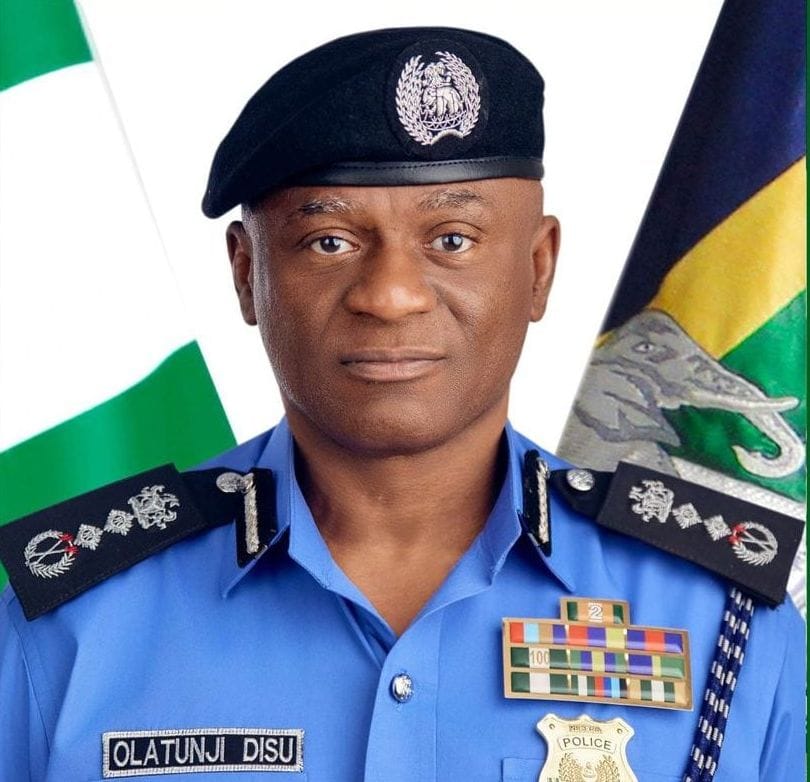
Sunday Aborisade in Abuja
A sweeping redeployment of police personnel ordered by the Inspector-General of Police (IG), Olatunji Disu, is being described as a bold and strategic move to return policing to the grassroots, rebuild public trust, and strengthen crime prevention across the country.
This view was expressed by a Nigeria Police Force/United States consultant and liaison, Busayo Mogaji, who is also the Chief Executive Officer of Western Eagle Limited.
In a statement made available to THISDAY in Abuja, Mogaji addressed reactions trailing the mass transfer of officers across commands. He described the development as “a necessary and long overdue recalibration of Nigeria’s policing architecture.”
Mogaji said the redeployment, though it may appear disruptive at first glance, is one of the most significant internal reforms seen in recent times.
“The redeployment may look disruptive on the surface, but in reality, it is one of the most important internal reforms we have seen in recent times,” he said.
“What the Inspector-General has done is to deliberately move policing closer to the people, where it truly belongs.”
The police authorities recently redeployed hundreds of officers from zonal commands and administrative units to divisions and other operational formations in Abuja, Lagos, Kano, and other parts of the country. The move has sparked debate within security and public circles.
However, Mogaji insisted that the exercise goes beyond routine transfers, noting that it is aimed at correcting long-standing structural distortions within the force.
“For years, we have had a situation where too many officers are concentrated in administrative and zonal postings, while the divisions—the real engine room of policing—remain understaffed. This redeployment addresses that imbalance directly,” he explained.
He also highlighted the issue of prolonged stagnation within certain formations, revealing that some officers had remained in the same postings for over a decade.
“In some cases, officers have stayed in one command for 10, 15, even 20 years. That kind of stagnation affects efficiency, breeds complacency, and sometimes compromises accountability. Rotation is not just administrative, it is strategic,” Mogaji said.
According to him, the renewed focus on divisional policing would significantly enhance emergency response and improve public safety outcomes.
“Police stations are the first point of contact for citizens in distress, yet many of them lack adequate manpower,” he noted.
“By strengthening these stations, you are automatically improving response time, visibility, and the overall effectiveness of policing.”
Mogaji further emphasized that the redeployment aligns with the globally recognized model of visibility policing, which he described as a key deterrent to crime.
“When officers are visible, accessible, and embedded within communities, crime naturally reduces. Criminals thrive in anonymity and gaps. This strategy is designed to close those gaps,” he said.
He also underscored the importance of rebuilding trust between the police and the public, stressing that effective policing depends heavily on cooperation and intelligence from citizens.
“You cannot police effectively without the trust of the people. Community engagement is the backbone of intelligence gathering. When people trust the police, they share information, and that makes prevention—not just reaction—possible,” he stated.
While acknowledging concerns about possible disruptions within command structures, Mogaji maintained that such fears are outweighed by the long-term benefits of the reform.
“Yes, there may be temporary adjustments, but we must ask ourselves: what is the ultimate goal? It is safer communities and a more responsive police force. We cannot continue with a system that prioritizes bureaucracy over service delivery,” he said.
He added that the move reflects ongoing efforts to decentralize policing functions within the current framework, even as national discussions on broader reforms—such as state policing—continue.
“This is a practical step toward decentralization. While we debate structural reforms at the national level, internal measures like this can immediately improve efficiency and bring tangible results,” he added.
Mogaji concluded by stressing that the success of the redeployment should be judged by measurable outcomes.
“At the end of the day, it is not about how many officers were moved. It is about whether communities feel safer, whether response times improve, and whether citizens begin to see the police as partners rather than distant enforcers,” he said.







Comments
0 comments