
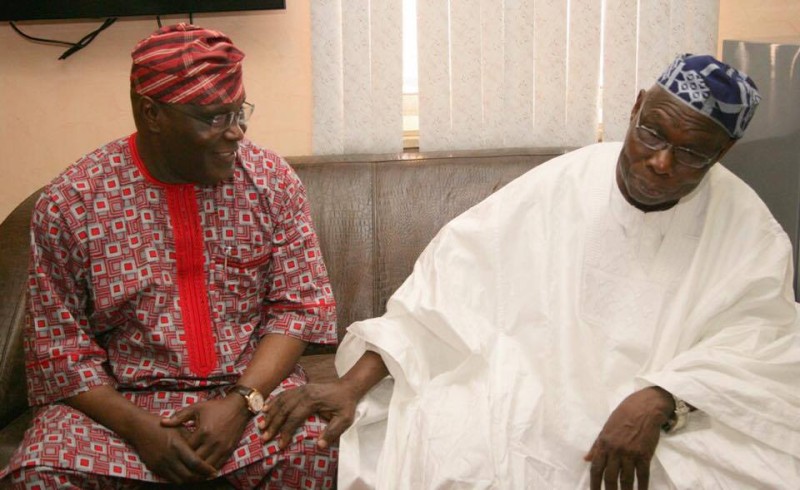
When Olusegun Obasanjo was sworn in as President on May 29, 1999, he chose Atiku Abubakar as his Vice President — a decision many saw as a strategic masterstroke to balance North-South and Muslim-Christian interests. For the first two years, the relationship appeared cordial. Atiku handled party matters and represented the president on several national trips. But beneath the surface, cracks were already forming that would eventually erupt into one of the most dramatic power struggles in Nigeria’s Fourth Republic.
The Cracks Begin
By 2001, Atiku had begun to feel sidelined. Obasanjo, a strong-willed former military leader, ran the presidency with a firm grip, often bypassing the Vice President on key decisions. Atiku, a seasoned politician with his own network and ambitions, started to voice concerns privately about Obasanjo’s leadership style. He believed the president was becoming too authoritarian and was alienating key stakeholders within the PDP.
The tension escalated when Atiku began undertaking high-profile foreign trips — some allegedly without full clearance from the presidency. These trips, which took him to the United States and Europe, were interpreted by Obasanjo’s inner circle as Atiku positioning himself for higher office. Obasanjo reportedly became furious, viewing the moves as disloyalty.
The Mandela Treatment Suggestion
The breaking point came when Atiku openly suggested that Obasanjo should emulate Nelson Mandela by serving only one term and stepping aside gracefully in 2003. Atiku argued that this would strengthen Nigeria’s democracy and allow fresh leadership to emerge. He reportedly told close associates that Obasanjo should “do a Mandela” — serve with honour and leave a lasting legacy without clinging to power.
This suggestion was seen by Obasanjo loyalists as outright betrayal. In their eyes, Atiku was not just advising — he was positioning himself as the natural successor. The relationship between the two men deteriorated rapidly. Obasanjo began to sideline Atiku even more, while Atiku strengthened his own political structures, especially in the North.
Open Hostility and the Third-Term Battle
By 2003, the rift had become public. During Obasanjo’s re-election campaign, Atiku was largely kept at arm’s length. After Obasanjo won a second term, the cold war intensified. Atiku’s supporters accused Obasanjo of attempting to impose a third term on the nation, a move Atiku vehemently opposed. The Vice President aligned himself with National Assembly members and other PDP heavyweights to block the third-term agenda.
The battle became so fierce that there were reports of plots to impeach Atiku or remove him from office. Obasanjo, in turn, allegedly worked to weaken Atiku’s influence within the PDP. The once-powerful partnership had turned into open political warfare.
A Rivalry That Defined an Era
The Atiku-Obasanjo feud marked a significant shift in Nigerian politics. It showed that even within the same party and administration, personal ambition and differing visions of leadership could tear alliances apart. Atiku’s decision to challenge his principal helped weaken Obasanjo’s grip on the party and paved the way for his own future presidential runs.
Years later, the two men would reconcile enough to work together in some political contexts, but the scars of that first-term betrayal remain visible in Nigerian political memory. Atiku’s bold stand against his boss in 1999–2003 cemented his image as a man willing to challenge power, even at great personal and political cost.
The story remains a classic case study in the complex, often treacherous nature of power and loyalty in Nigerian politics.
What do you think? Was Atiku right to challenge Obasanjo the way he did, or was it premature disloyalty? Share your thoughts in the comment section.