
How to Survive If Mistakenly Buried Alive: Survival Advice From Emergency Guides
 Follow on Google News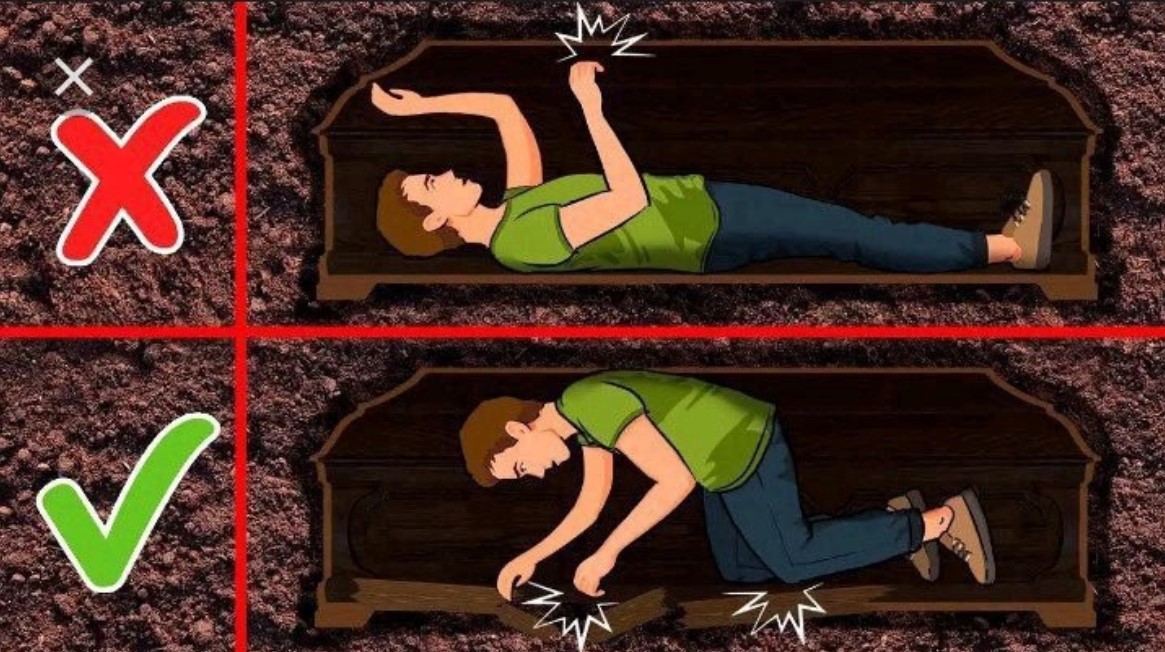
The unsettling scenario of being buried alive is extremely rare in modern society, largely due to improved medical certification procedures and stricter burial regulations. However, survival experts and emergency preparedness guides continue to discuss the subject as part of confined-space survival training, emphasizing calm behavior and energy conservation as the most important factors.
According to survival literature, the first and most critical response in such a situation is to remain calm. Experts explain that panic can significantly increase heart rate and breathing, which in turn accelerates oxygen consumption in a sealed and limited-air environment. Controlled breathing is therefore frequently recommended as a way to conserve oxygen and extend survival time.
Survival discussions also suggest that individuals should avoid unnecessary movement, as physical activity can quickly deplete available air. Remaining still and focusing on steady breathing may help reduce panic and preserve energy.
In some survival guides, making noise is advised as a potential way to attract attention from the surface. This may include banging on the coffin walls or using any available hard object to create sound signals. However, experts also caution that excessive shouting or continuous movement may lead to faster oxygen depletion, which could reduce survival chances.
Another commonly mentioned recommendation is to avoid immediately attempting to force open the coffin lid, especially if underground. Survival sources explain that doing so may cause soil to collapse inward, further restricting airflow and increasing danger. Instead, gradual efforts to create space or identify weak points in the structure are sometimes suggested, while still prioritizing air conservation.
Some guides also note that removing tight or heavy clothing, if possible, may help reduce discomfort and overheating in the confined space, although options are usually very limited.
Historically, fears of premature burial were more common before the advancement of modern medicine. In earlier centuries, uncertainty in confirming death led to the invention of so-called “safety coffins,” which included mechanisms such as bells, air tubes, or signaling devices intended to alert others if a person regained consciousness.
Today, such scenarios are considered highly unlikely due to improved medical verification processes before burial. Nevertheless, survival experts emphasize that the key principles in any enclosed-space emergency remain the same: stay calm, conserve oxygen, and seek ways to signal for help.







Comments
0 comments