
Locked in a Room After Abacha’s Sudden Death — The Intense Political Drama That Forced Abdulsalami to Hand Over Power in Just 11 Months
 Follow on Google News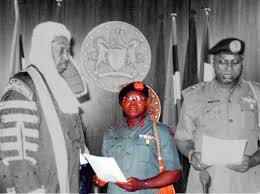
In the chaotic hours following General Sani Abacha’s sudden death on June 8, 1998, Nigeria teetered on the edge of another prolonged military nightmare. Senior officers jostled for power, suspicion filled the corridors of Aso Rock, and the fear of a bloody counter-coup hung heavy in the air.
It was in this tense atmosphere that General Abdulsalami Abubakar found himself locked inside a room at the Presidential Villa, isolated from the unfolding power play. When the door finally opened and he was told Abacha was dead, his life — and Nigeria’s future — changed forever.
The High-Stakes Political Manoeuvring
The Provisional Ruling Council was divided. Some ambitious generals eyed the throne, while others feared instability and international isolation. Abdulsalami, then Chief of Defence Staff, was not the most obvious choice. Yet, in a remarkable consensus driven by both necessity and calculation, the military hierarchy settled on him as a neutral, professional figure who could steady the ship without triggering chaos.
From the moment he was sworn in on June 9, 1998, intense political pressure began mounting from all sides: pro-democracy activists, civil society, international governments, and even within the military itself. Many expected another long-drawn dictatorship. But Abdulsalami had other ideas.
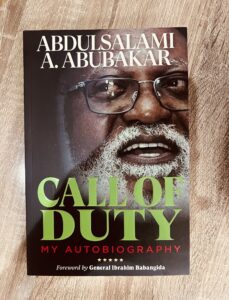
He faced a deeply fractured nation — economically crippled, internationally isolated, and politically exhausted after years of Abacha’s repression. In his autobiography Call of Duty, he described the weight of responsibility: the country needed a bridge, not another ruler.
The 11-Month Transition Miracle
Against expectations and internal resistance from hardliners who wanted to cling to power, Abdulsalami moved with surprising speed and determination. He released political prisoners, relaxed media restrictions, reviewed draconian decrees, and set up a genuine transition programme. Political parties were allowed to form, elections were conducted, and a new civilian constitution was prepared.
On May 29, 1999 — exactly 11 months after taking office — General Abdulsalami Abubakar did what few military leaders in Africa have ever done willingly: he handed over power to a democratically elected civilian government led by Olusegun Obasanjo.
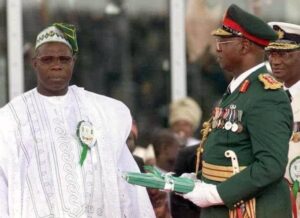
It was a defining moment that ended 16 years of unbroken military rule and birthed Nigeria’s Fourth Republic.
A Legacy of Rare Sacrifice
Abdulsalami’s decision was not without criticism. Some accused the transition of being too hasty or compromised. Yet, his action prevented what could have been another cycle of coups, violence, and instability. In an era where leaders desperately cling to power, his swift handover stood out as an act of rare statesmanship.
Decades later, his revelation about being locked in that room after Abacha’s death only adds to the drama of those tense hours — a vivid reminder of how close Nigeria came to further turmoil, and how one man’s choice helped steer the country toward democracy.
Source: Premium Times NG and General Abdulsalami Abubakar’s autobiography Call of Duty
What do you think about Abdulsalami’s rapid transition? Was it genuine sacrifice or clever political strategy under pressure? Share your thoughts in the comment section.





Comments
0 comments