
Mukhtar Adamu: The Lagos BDC Operator the US Says Bankrolled ISWAP
 Follow on Google News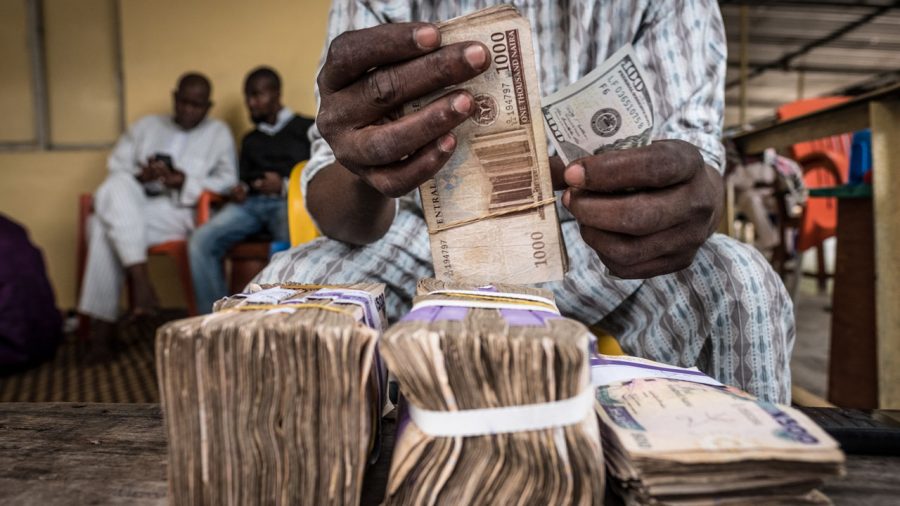
A 35-year-old Bureau De Change operator from Agege, Lagos, has been placed on the United States sanctions list for allegedly serving as a financial facilitator for the Islamic State West Africa Province (ISWAP). His case has thrown the spotlight on how Nigeria’s largely informal foreign exchange market is being exploited to move money for terrorist groups.
Who is Mukhtar Adamu Muhammad?
Mukhtar Adamu Muhammad, also known as Mukthar Muhammad Adamu, is a Lagos-based businessman who operates multiple Bureau De Change (BDC) outlets. He is believed to control or have interests in several BDC companies across Lagos and Kano States, including:
– Generation Currency Bureau De Change Ltd
– Nine to Nine Exchange Bureau De Change Ltd
– Manhattan Bureau De Change Ltd (Kano)
On June 23, 2026, the United States Department of the Treasury’s Office of Foreign Assets Control (OFAC) designated him and his companies for allegedly facilitating financial transactions on behalf of ISWAP.
Nigeria’s own Sanctions Committee had already listed him days earlier on June 18, 2026, following local investigations into terrorism financing.
How BDCs Are Used to Finance Terrorism
Bureau De Change operators have become a major concern for security agencies because of the nature of their business. Unlike banks, most BDC transactions are cash-based, poorly documented, and conducted with minimal Know-Your-Customer (KYC) checks. This makes them attractive for moving illicit funds.
Terrorist groups and their financiers exploit BDCs in several ways:
– Cash Smuggling and Structuring: Large sums of money can be broken into smaller transactions across multiple BDCs to avoid detection.
– Layering Through Multiple Outlets: Funds can be moved through several BDC companies in different locations (Lagos, Kano, Abuja) to obscure the source and destination.
– Cross-Border Transfers: BDCs are often used to convert naira to foreign currencies (especially dollars and euros), which are then moved out of the country through informal channels or hawala-like systems.
– Trade-Based Money Laundering: Some BDC operators inflate or under-invoice import and export transactions to move value across borders without raising red flags.
– Low Regulatory Oversight: While banks are heavily regulated, many BDCs operate with weak supervision, making it easier to hide terrorist financing.
Security experts say that because BDCs deal in high volumes of cash daily, it becomes difficult to distinguish legitimate foreign exchange transactions from those linked to terrorism or banditry.
Mukhtar’s Alleged Role
According to the U.S. Treasury, Mukhtar Adamu Muhammad used his BDC network to move funds on behalf of ISWAP across Europe, the Middle East, and West Africa. This suggests his operation was not limited to local transactions but formed part of a wider international financial support system for the terrorist group.
His alleged ability to move money across multiple regions indicates a relatively sophisticated network, possibly involving coordination with other financial operators and informal value transfer systems.
Why This Case Matters
Mukhtar Adamu Muhammad’s designation is significant for two main reasons:
First, it shows that terrorist groups like ISWAP are increasingly relying on seemingly legitimate businesses, particularly in the foreign exchange sector, to sustain their operations.
Second, it highlights the growing cooperation between Nigerian authorities and international partners in tracking terrorism financing. The fact that Nigeria designated him before the U.S. acted suggests improved local intelligence and financial tracking capabilities.
However, it also exposes the challenges in regulating the BDC sector. With thousands of BDC operators across the country, many of whom operate informally, monitoring every transaction remains extremely difficult.
Current Status
Mukhtar Adamu Muhammad remains under investigation by Nigerian security agencies, including the Economic and Financial Crimes Commission (EFCC). His assets linked to the U.S. financial system are frozen, and American persons or companies are prohibited from doing business with him or his companies.
His case is part of a broader crackdown on individuals and entities accused of financing terrorism in the Lake Chad region.
As security agencies continue to investigate how deeply embedded terrorist financing networks are within Nigeria’s informal financial sector, cases like this serve as a reminder that the fight against terrorism is no longer just about kinetic operations — it is increasingly becoming a battle over money trails.
Source: U.S. Treasury OFAC, Nigerian Sanctions Committee & security sources.





Comments
0 comments