
My Mom Wore the Same Coat for 30 Years – Then I Checked the Pockets
 Follow on Google News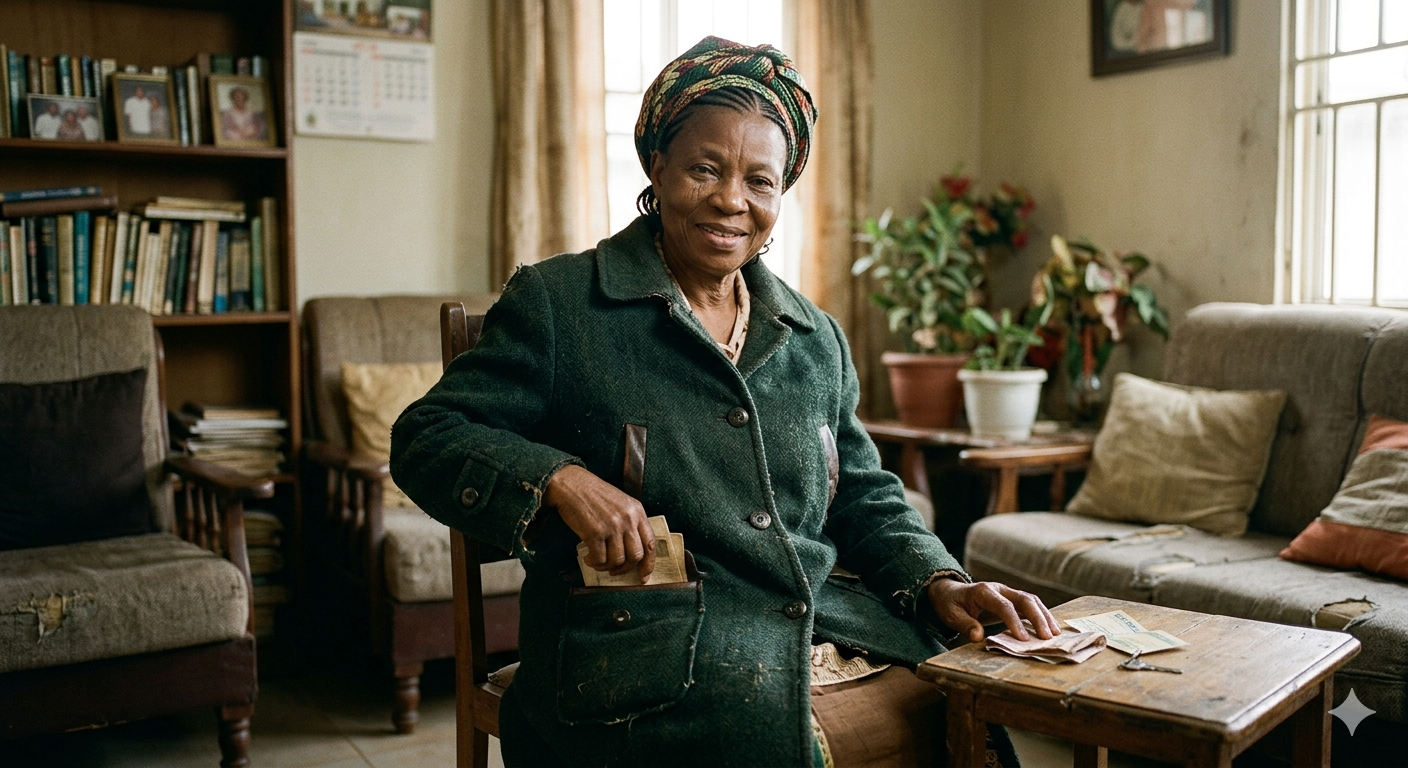
For as long as I could remember, my mother owned only one coat.
Not literally one coat, of course.
She had other clothes.
Other outfits.
Other shoes.
But there was one old brown coat she wore every year without fail.
Every Harmattan.
Every cold morning.
Every trip.
Every church service during the rainy season.
That coat was always with her.
The sleeves had faded.
The buttons had been replaced multiple times.
The lining was torn in places.
And yet she refused to throw it away.
Whenever I offered to buy her a new one, she’d smile and say:
“This one still works.”
I never questioned it.
Until the day she died.
My name is Chinedu.
I’m from Enugu, Nigeria.
And my mother, Ngozi, was the strongest person I’ve ever known.
She raised four children alone after my father passed away when I was only six years old.
Life was never easy for her.
She sold vegetables in the market.
Worked as a cleaner.
Cooked food for events.
Did whatever honest work she could find to keep us fed.
There were days she left home before sunrise and returned long after dark.
Yet somehow, she always found the strength to smile.
Growing up, I never understood how much she sacrificed.
Children rarely do.
We notice what we don’t have.
We rarely notice what our parents go without.
While I complained about old shoes, she wore sandals with broken straps.
While I worried about school trips, she worried about paying fees.
While I dreamed of becoming successful, she quietly worked herself to exhaustion helping me get there.
Years passed.
By God’s grace, all four of us made something of ourselves.
I became an engineer.
My younger brother became a doctor.
My sisters started successful businesses.
For the first time in her life, our mother no longer had to struggle.
We wanted to spoil her.
To repay her.
To finally give her the life she deserved.
But she never changed.
Not really.
Even after we started sending her money.
Even after we renovated her house.
Even after we begged her to spend more on herself.
She remained the same woman.
Simple.
Modest.
Content.
And every year, she still wore that old brown coat.
One December, I surprised her with an expensive imported winter jacket.
She thanked me warmly.
Then hung it in her wardrobe.
The following week, I visited again.
She was wearing the old coat.
As usual.
“Mama,” I laughed.
“Why won’t you wear the new one?”
She smiled.
“This one knows me already.”
We all laughed.
But looking back, there was something unusual in the way she said it.
Something deeper.
Something I didn’t understand at the time.
Three years later, she passed away peacefully in her sleep.
She was seventy-eight.
The loss devastated us.
No matter how old you become, losing your mother leaves a hole that never completely closes.
After the funeral, my siblings and I gathered to sort through her belongings.
Most things were ordinary.
Old photographs.
Church books.
Family albums.
Letters.
Small keepsakes.
Nothing valuable.
Nothing surprising.
Then I found the coat.
Still hanging where it always had.
I smiled sadly.
For a moment, I could almost hear her voice.
“This one still works.”
I removed it from the wardrobe.
Planning to donate it.
Then something made me stop.
The coat felt unusually heavy.
At first, I assumed it was because of the thick fabric.
But curiosity got the better of me.
I slipped my hand into the right pocket.
And froze.
There was something inside.
I pulled it out.
A folded piece of paper.
Yellowed with age.
Carefully preserved.
I opened it.
And immediately felt tears forming.
It was a grocery list.
Written in my mother’s handwriting.
Dated thirty years earlier.
At the bottom was a note.
A note she had written to herself.
“Buy Chinedu’s school books first.”
“I can wait.”
My throat tightened.
I checked the other pocket.
There was another paper.
Then another.
Then another.
Soon, dozens of folded notes covered the floor around me.
Each one carried a date.
Each one revealed a small sacrifice.
“Ngozi, don’t buy the new shoes.”
“Use the money for Ada’s medicine.”
“Skip lunch today.”
“Pay electricity bill first.”
“Your wrapper can last another year.”
“Save money for Emeka’s WAEC registration.”
“Fix the children’s uniforms.”
“Don’t worry about your own clothes.”
I couldn’t breathe properly anymore.
My siblings gathered around.
Reading silently.
Crying openly.
Then we discovered something even more heartbreaking.
Many of the notes weren’t reminders.
They were prayers.
Private prayers.
Prayers she had carried in her pockets for decades.
“God, please let my children have opportunities I never had.”
“Protect them even when I cannot.”
“If there isn’t enough for all of us, let there be enough for them.”
“I don’t need much. Just take care of my children.”
By then, none of us could stop crying.
The coat wasn’t just a coat.
It was an archive.
A record of thirty years of silent sacrifices.
Thirty years of choosing us over herself.
Thirty years of putting everyone else’s needs before her own.
Then I found the final pocket.
A small hidden compartment sewn into the lining.
I had never noticed it before.
Neither had my siblings.
Inside was a sealed envelope.
My hands trembled as I opened it.
The envelope contained four letters.
One addressed to each child.
I opened mine first.
The words blurred through tears.
“My dear Chinedu,”
“If you are reading this, then God has called me home.”
“Please don’t be sad for too long.”
“I have lived a full life because I had you.”
“Everything I ever gave up was worth it.”
“Every missed meal.”
“Every long day.”
“Every sacrifice.”
“I would do it all again.”
I had to stop reading.
The tears became overwhelming.
Then I reached the final paragraph.
The paragraph that completely broke me.
“You children always worried that I never bought a new coat.”
“The truth is, I kept this coat because its pockets carried my journey.”
“Whenever life became difficult, I would place my worries, prayers, and dreams for you inside it.”
“Over time, the coat stopped being clothing.”
“It became a reminder that God had carried us through everything.”
The room fell silent.
Nobody could speak.
That night, after everyone left, I sat alone holding the old brown coat.
For the first time in my life, I understood something profound.
The greatest acts of love are rarely dramatic.
They don’t make headlines.
They don’t go viral.
They don’t attract applause.
Sometimes love looks like an old coat worn for thirty years.
A coat filled with forgotten prayers.
Hidden sacrifices.
And dreams quietly carried in its pockets.
Today, the coat hangs in my home.
Not because it is valuable.
Not because it is fashionable.
But because it reminds me of the richest woman I have ever known.
A woman who died with very little.
Yet somehow gave her children absolutely everything.
Source: Original This story is inspired by the real experiences of our readers. We believe that every story carries a lesson that can bring light to others. To protect everyone’s privacy, our editors may change names, locations, and certain details while keeping the heart of the story true. Images are for illustration only. If you’d like to share your own experience, please contact us via email.






Comments
0 comments