
The Mysterious Death of Tunde Idiagbon: What Really Happened Before Obasanjo’s Return to Power In 1999?
 Follow on Google News
On 24 March 1999, just days before Olusegun Obasanjo was sworn in as Nigeria’s civilian president on 29 May 1999, the nation was shocked by the news of the death of Major General Babatunde Abdulbaki Idiagbon (Rtd). The former Chief of Staff, Supreme Headquarters under Buhari, died suddenly at the age of 61.
His death, coming at such a symbolic moment — the transition from military to civilian rule — raised many questions. Was it a natural death, or was there more to the story?
The Historical Context
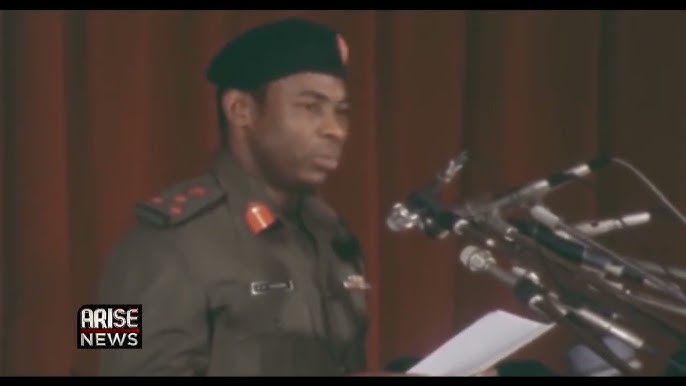
Idiagbon had been a central figure in the 1983–1985 Buhari military regime. Known for his strict discipline and role in the War Against Indiscipline (WAI), he was respected by some and feared by many. After the 1985 coup that brought Babangida to power, Idiagbon largely stepped away from active politics and lived a relatively quiet life.
By the late 1990s, Nigeria was preparing for the return to civilian rule after years of military dictatorship, first under Abacha and then under the short transition led by Abdulsalami Abubakar. Obasanjo’s emergence as the PDP candidate and eventual president marked a new chapter.
Idiagbon’s death occurred just as this transition was reaching its climax.
What We Know About His Death
Official reports stated that Idiagbon died of natural causes, specifically a heart-related issue. He was said to have passed away peacefully at his home in Ilorin, Kwara State. There was no public indication of foul play at the time, and his burial was conducted with full military honours.
However, in the murky world of Nigerian politics and military intrigue, his death inevitably sparked speculation. Some wondered whether powerful figures who had clashed with him in the past saw his survival as a potential threat or embarrassment during the new democratic dispensation.
The Untold Layers and Persistent Rumours
While no concrete evidence of foul play has ever been publicly established, several factors fuel ongoing questions:
– Timing: His death came at a sensitive political moment when old military figures were being scrutinised and the new civilian government was taking shape.
– His Reputation: Idiagbon was known to be principled, outspoken, and uncompromising. Some believed he possessed sensitive information about past regimes that could have been uncomfortable for certain individuals transitioning into the new democratic era.
– The Culture of Suspicion: In Nigeria’s history, the sudden deaths of prominent military figures have often been viewed with scepticism, especially when they occur during periods of political transition.
There was also the rumour that president-elect Obasanjo might be considering him for a ministerial appointment back then.
Idiagbon had largely stayed out of the public eye after 1985, focusing on private life and Islamic scholarship. Yet his symbolic importance as one of the key enforcers of the Buhari era meant his voice — even in retirement — carried weight.
The Real Story: Natural Causes or Convenient Timing?
The most credible accounts point to natural causes. Idiagbon was in his early sixties and had lived a disciplined but stressful life as a senior military officer during turbulent times. Heart-related issues are common in that age group, especially among those who have borne the pressures of high command.
There is no publicly available evidence linking his death to assassination or political elimination. However, the lack of a thorough independent investigation at the time, combined with Nigeria’s long history of suspicious deaths among prominent figures, continues to leave room for speculation.
Legacy and Reflection
Tunde Idiagbon is remembered as a strict disciplinarian who tried — however controversially — to instil order in a chaotic nation. His death just before the return to civilian rule marked the symbolic end of an era of military strongmen.
Obasanjo’s inauguration a few weeks later ushered in the Fourth Republic, a new beginning that many hoped would move Nigeria away from the authoritarian styles of the past.
Idiagbon’s passing, whether natural or not, closed one of the most memorable chapters of Nigeria’s military history. He left behind a legacy of discipline, controversy, and unanswered questions.
The real story behind his death may never be fully known beyond the official account. But in the minds of many who lived through that era, his sudden exit at such a pivotal moment remains a quiet, lingering mystery.
A principled soldier who enforced order with an iron hand — and whose death came just as Nigeria prepared to turn the page.
Rest in Peace, Major General Tunde Idiagbon. A man whose name is still synonymous with discipline in Nigeria’s military history.







Comments
0 comments