
Metro News
They didn’t kill a threat. They killed a truth that was becoming impossible to unhear.
 Follow on Google News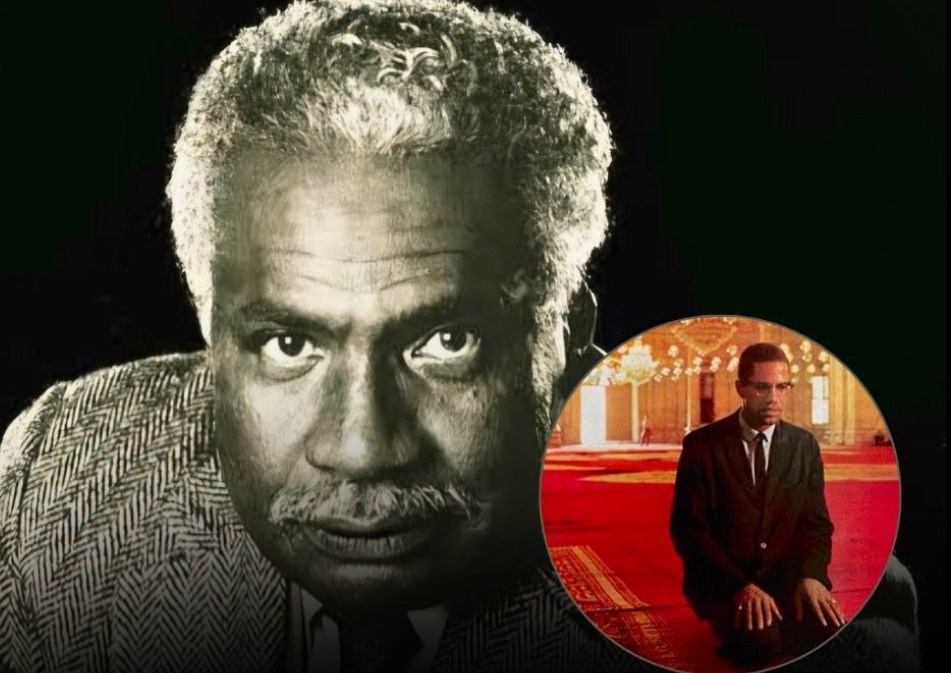
What happens when a man doesn’t just challenge a system… but changes how people see themselves inside it?
In 1965, at the Faith Temple Church of God in Harlem, actor and activist Ossie Davis stood before a grieving crowd and delivered words that would outlive the moment itself. He was speaking at the funeral of Malcolm X.
But this wasn’t just a eulogy.
It was an indictment.
A mirror held up to history.
He said Malcolm was not killed because he was a danger to the system in the way people usually imagine danger. Not because he was simply loud. Not because he was simply radical.
But because he taught something far more destabilizing.
That Black people were not the problem.
And once that idea enters a mind… nothing stays the same.
Not identity. Not fear. Not obedience. Not silence.
Because oppression doesn’t just survive through force. It survives through belief. Through the quiet acceptance of distortion. Through generations being taught to question their own worth before they ever question power.
And Malcolm X disrupted that programming.
He forced a generation to ask: What if everything I was taught about myself was a lie designed to keep me still?
That is the kind of question systems fear most.
Not rebellion with fists.
But rebellion with clarity.
Ossie Davis called him a “prince.” Not because of royalty in the traditional sense, but because Malcolm carried himself like someone who had remembered something others had forgotten about their own humanity.
And history is complicated in how it responds to people like that.
It does not always erase them. Sometimes it eliminates them.
But even elimination fails when the idea has already spread.
Because ideas don’t need permission to travel.
They move through speech, through memory, through unfinished conversations in kitchens, classrooms, barber shops, and churches.
And that is why Malcolm X is still here in ways that cannot be buried.
Not as myth.
But as question.
As tension.
As awakening.
The deeper message of that 1965 eulogy was not just mourning.
It was warning.
That truth-tellers are rarely accepted in their time… because acceptance would require the system to admit it has been lying.
And that is too expensive for power to confess easily.
So instead, it reacts.
But reaction always arrives late.
Because once a person has seen clearly, you cannot return them to blindness without their consent.
And Malcolm X refused to give that consent to anyone.
Even in death, his voice continued to speak through others.
Through Ossie Davis.
Through movements that followed.
Through generations still trying to understand what it means to be told, without hesitation, that they were never the problem.
That realization changes everything.
And that is exactly why it was feared.
And support the movement by getting our debut book: “20 African Wonder Women That Changed History.”






Comments
0 comments