
Truth vs Misinformation: The Role of Social Media in the Jos Crisis
 Follow on Google News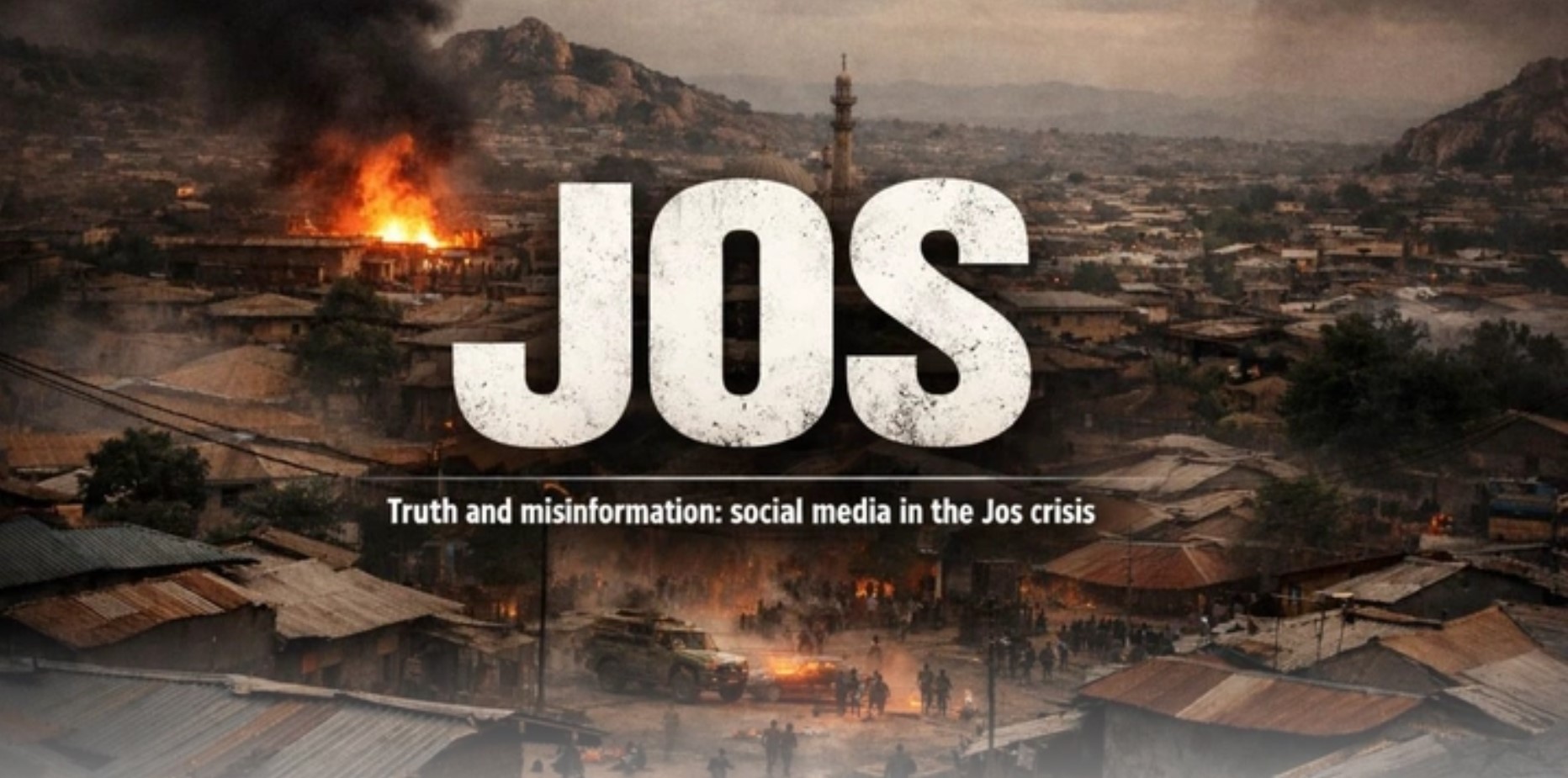
When crisis erupts, information moves at lightning speed—often faster than facts can be verified. In today’s digital world, platforms like Facebook, WhatsApp, and X become the first point of contact for many people seeking answers. But as the recent unrest in Jos revealed, speed can be both a lifeline and a liability.
Within minutes of tensions rising, social media was flooded with posts, videos, and voice notes. For many residents, these updates shaped their understanding of events long before official statements emerged.
A City with a Fragile History
Jos has long been associated with ethno-religious tensions, making it particularly vulnerable during periods of unrest. While the immediate triggers of the latest crisis remain unclear, speculation quickly filled the information vacuum online.
In such situations, people instinctively turn to their phones—not just to communicate, but to make sense of unfolding events. Social media becomes the frontline of information, whether accurate or not.
The Positive Side: A Digital Lifeline
Despite its risks, social media played a critical role during the crisis.
Platforms like WhatsApp became emergency communication hubs. Residents shared real-time alerts about:
- Unsafe areas
- Security checkpoints
- Safer routes to navigate the city
Messages like “Stay indoors” or “Avoid this road” spread rapidly, helping people make quick decisions.
In some communities, digital coordination went even further. Volunteers organized assistance for displaced individuals, shared resources, and helped reconnect families. Journalists and citizen reporters also used these platforms to amplify developments, drawing national attention to the situation.
In moments where every second matters, this speed of communication undoubtedly saved lives.
The Dark Side: When Falsehood Spreads Faster Than Truth
However, the same speed that made social media helpful also made it dangerous.
Unverified content spread just as quickly—if not faster. Old videos from past conflicts resurfaced as “current” footage. Images from unrelated incidents were repurposed to fuel fear. Voice notes, often emotional and alarming, circulated widely without any form of verification.
Conflicting casualty figures added to the confusion. While one post claimed 26 deaths, others reported 28, 30, or even 35. This inconsistency didn’t just misinform—it intensified panic and uncertainty.
In some cases:
- People fled areas that were actually safe
- Communities reacted based on false narratives
- Tensions escalated unnecessarily
The damage was not just informational—it was emotional and social.
Why People Share Misinformation
To understand the spread of false information, it’s important to look at human behavior during crises.
When fear takes over, people prioritize speed over accuracy. The instinct is simple: warn others quickly. Verification becomes secondary.
As Daniel Kahneman explains:
“A general limitation of the human mind is its imperfect control over attention.”
In high-stress situations, attention narrows. Emotions drive decisions. A message that sounds urgent—“There’s an attack nearby”—is more likely to be shared instantly than questioned.
Social media algorithms amplify this effect by promoting content that triggers strong emotional reactions. The result is an environment where dramatic, unverified posts gain more visibility than calm, factual updates.
The Struggle of Authorities to Keep Up
Government agencies and security forces attempted to provide updates and reassurance. However, their efforts were often overshadowed by the sheer volume of social media content.
Fact-checking organizations faced a similar challenge. By the time misinformation was corrected, it had already spread widely.
This gap highlights a key issue:
in a crisis, speed often beats accuracy.
Impact on Society
The effects of misinformation went beyond confusion.
- Trust between communities weakened
- Suspicion increased among residents
- Confidence in official sources declined
One resident expressed frustration online:
“Leaving Jos has never crossed my mind before… but now, if I have the means, I will leave.”
This reflects a deeper impact—fear not just of violence, but of uncertainty itself.
The Need for Digital Responsibility
The Jos crisis offers important lessons for everyone:
✔ Verify Before Sharing
Pause and check the source, even in urgent situations.
✔ Responsible Content Creation
Media outlets, influencers, and individuals must prioritize accuracy.
✔ Faster Official Communication
Authorities need to respond quickly and clearly to counter misinformation.
✔ Digital Literacy
People must be equipped to identify false or misleading content.
A Tool That Reflects Human Behavior
Social media did not cause the crisis in Jos—but it significantly shaped how it unfolded.
It connected people, provided critical updates, and offered support in real time. At the same time, it spread fear, amplified misinformation, and deepened existing divisions.
In the end, social media is neither good nor bad. It reflects how people use it.
The real question is not about the platform—but about responsibility:
Will we use it to inform and protect, or to mislead and escalate?







Hi,
I’m reaching out because we help brands connected to africaglobaltimes.com build authority on Instagram.
We use our customized AI system, mixed with natural manual interaction to drive niche-relevant followers to your page safely.
Open to finding out more about this?
Gemma