
Words That Are in The Bible That Will Make You Furious (Opinion)
 Follow on Google News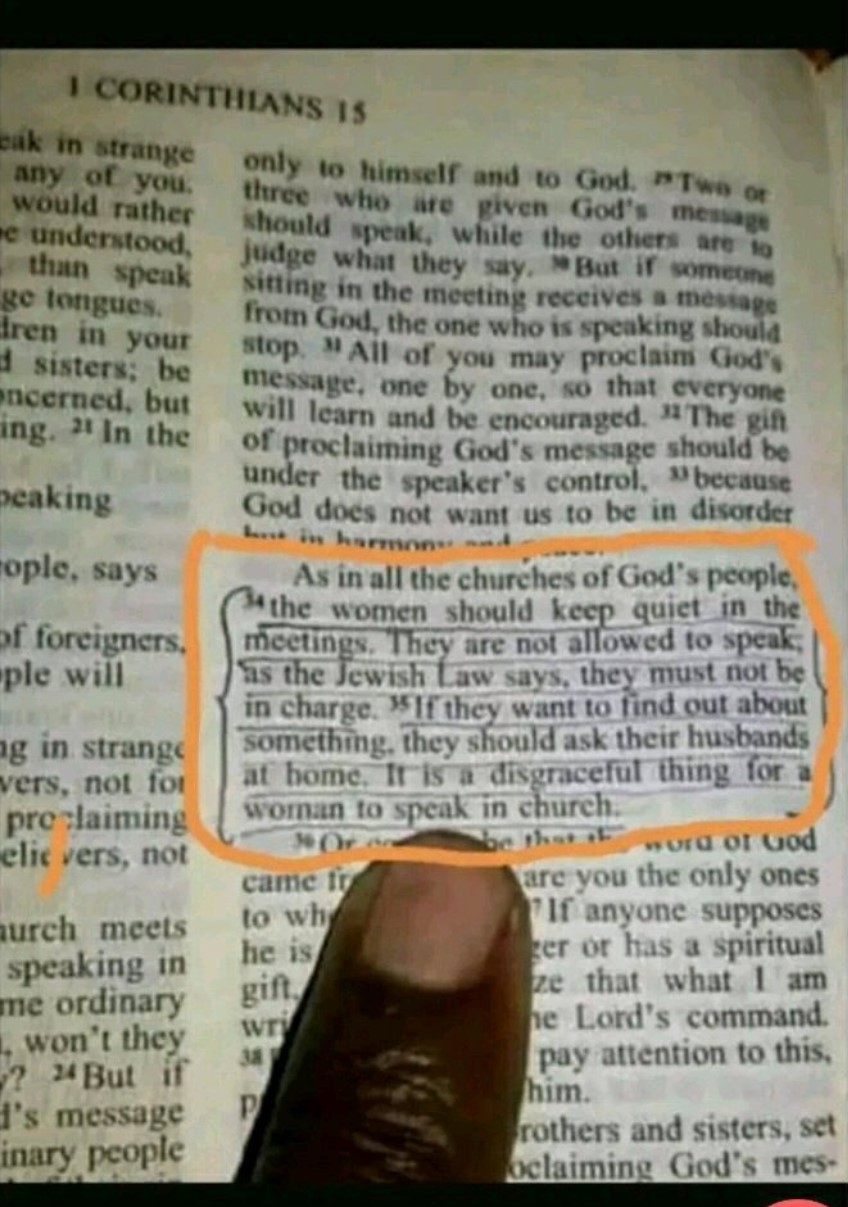
Raised in a devoted Christian family, she explained that attending church was a natural part of her upbringing. With both parents actively involved in their faith, she grew up participating in church services and embracing Christian teachings from an early age.
However, her perspective was shaken after reading a passage in the Bible that appears to instruct women to remain silent during church gatherings. The verse, found in 1 Corinthians 14:34-35, states that women should remain silent in the churches, should not be permitted to speak, and should instead remain in submission.
According to the woman, reading the passage left her feeling hurt and disappointed. As someone who strongly supports gender equality and women’s empowerment, she struggled to understand why women would seemingly be assigned a lesser role in places of worship.
She questioned how such instructions align with the belief that both men and women were created by God and should therefore be valued equally. The passage prompted her to reflect deeply on her relationship with the church and whether she still feels comfortable participating in services.
The issue has long been a subject of debate among Christians worldwide. Some theologians argue that the passage should be interpreted within the historical and cultural context of the early church, suggesting that it addressed specific circumstances at the time rather than serving as a universal command for all generations.
Others maintain that the verse reflects broader teachings about gender roles within Christian worship and church leadership. The differing interpretations have led to ongoing discussions among believers from various denominations.
The woman’s concerns have resonated with many people, particularly those who support greater inclusion and leadership opportunities for women within religious institutions. Her experience highlights the challenges some believers face when attempting to reconcile traditional religious teachings with contemporary views on equality and empowerment.
What are your thoughts on this issue? Do you believe the passage should be applied in today’s churches, or should it be understood within its historical context? Share your views.






Comments
0 comments