
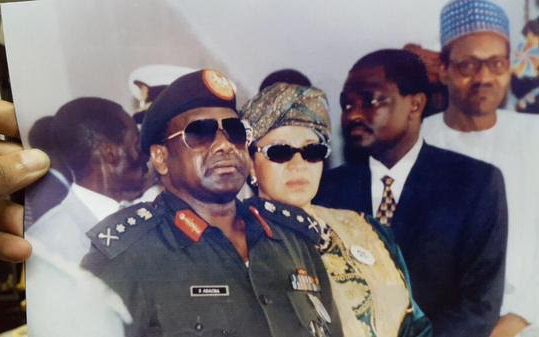
On the morning of June 8, 1998, Nigeria’s military strongman, General Sani Abacha, died suddenly at the Presidential Villa in Abuja. What followed was a high-stakes drama filled with suspicion, calculated moves, and intense behind-the-scenes manoeuvring that would determine who would steer the country next.
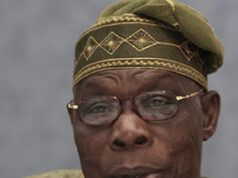
In his autobiography Call of Duty, former Head of State General Abdulsalami Abubakar (then Chief of Defence Staff) revealed one of the most intriguing details of that chaotic morning. He received an urgent call that Abacha wanted to see him immediately. Upon arriving at the Villa, instead of being taken to meet the Head of State, Abdulsalami was ushered into a room and locked in from the outside. He was not alone — another senior officer was confined with him. For over an hour, the two men remained in the locked room with no explanation, completely isolated from events unfolding around them.
The door was eventually opened by Ibrahim Coomassie, then Inspector-General of Police, who broke the news: General Sani Abacha was dead. Abdulsalami described his shock at the revelation and immediately requested to see the body and offer prayers.
Questions of Suspicion and Strategy
The locked-room episode has sparked intense speculation. Why was the Chief of Defence Staff — one of the most senior officers — detained in this manner at such a critical moment?
Several theories have emerged:
– Precautionary Measure: Some accounts suggest it was a security protocol amid fears of an immediate counter-coup or internal revolt. Abacha’s regime was built on paranoia, with frequent real and imagined threats. Locking key figures might have been a way to control the narrative and prevent rash actions while the inner circle assessed the situation.
– Succession Manoeuvring: Others view it as part of a calculated strategy. Abdulsalami was reportedly due for retirement around that time, yet he emerged as the consensus choice. By isolating him briefly, those managing the transition could control information flow, gauge loyalties, and ensure a smooth handover without rival factions mobilising. The swift announcement of Abdulsalami as the new Head of State on June 9, 1998, just hours later, points to pre-planned coordination among top military brass.
The period was rife with tension. Powerful figures like Major Hamza Al-Mustapha (Abacha’s Chief Security Officer) and other service chiefs were involved in the immediate power dynamics. Rumours of ambition, betrayal, and last-minute realignments filled the air. Some senior officers reportedly wept upon hearing the news, while others quickly positioned themselves for influence.
The Outcome and Legacy
Abdulsalami Abubakar’s short 11-month reign proved remarkably different from Abacha’s. He released political detainees (including MKO Abiola’s associates), eased media restrictions, and oversaw a credible transition to civilian rule, handing over power to President Olusegun Obasanjo in May 1999 — birthing Nigeria’s Fourth Republic.
Whether the locked room was a genuine security measure or a clever tactical move in a larger succession game remains a subject of debate. What is clear is that those tense hours in June 1998 marked a pivotal turning point — one that pulled Nigeria back from the brink of deeper crisis and set the stage for the return of democracy.
Abdulsalami’s candid revelation decades later reminds us how fragile power can be, and how much can happen behind locked doors in the corridors of Aso Rock.
Sources: General Abdulsalami Abubakar’s autobiography Call of Duty; reports by TheCable and other major Nigerian outlets.
What do you think? Was the locked room a security precaution or part of a calculated succession plan? Share your thoughts in the comment section.