
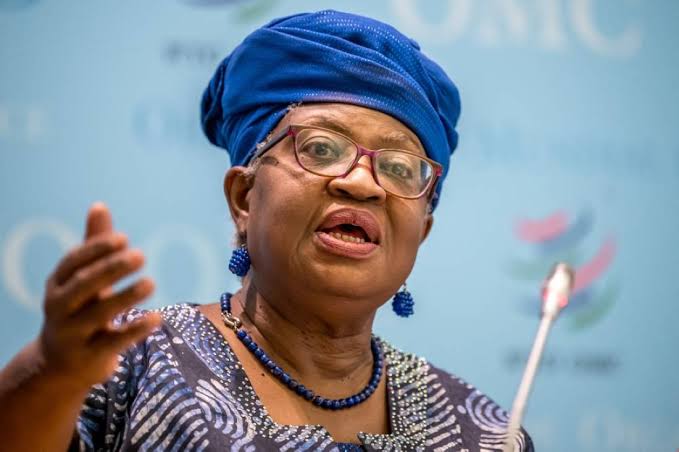
In late 2020, the race to become the next Director-General of the World Trade Organization (WTO) turned into one of the most dramatic geopolitical chess matches of the year. At the centre of it was Dr. Ngozi Okonjo-Iweala, the Nigerian economist, former Finance Minister, and World Bank veteran who had emerged as the overwhelming favourite — backed by over 160 of the WTO’s 164 members.
But there was one powerful holdout: the United States under President Donald Trump.

The Trump Blockade
The Trump administration, through U.S. Trade Representative Robert Lighthizer, threw its weight behind South Korea’s Trade Minister Yoo Myung-hee. Washington formally objected to Okonjo-Iweala, citing her background in development economics rather than “pure trade” experience. Because the WTO operates by consensus, a single major member’s objection was enough to deadlock the entire process.
For months, the selection process remained frozen. Okonjo-Iweala, despite enjoying unprecedented global support as the first African and first woman poised to lead the organisation, found herself in political limbo. Insiders described tense behind-the-scenes lobbying, with some fearing the position might remain vacant indefinitely or that a compromise candidate could emerge at the last minute.
The situation became even more precarious after the November 2020 U.S. presidential election. With Trump refusing to concede and the transition period dragging on, many worried that Okonjo-Iweala’s chances were slipping away.
Biden’s Intervention and the Dramatic Reversal
Everything changed in early February 2021, shortly after Joe Biden was sworn in as President. In one of his administration’s early foreign policy signals, Biden moved quickly to reverse Trump’s position. On February 5, 2021, the new U.S. government announced its “strong support” for Okonjo-Iweala.

Hours later, South Korea’s Yoo Myung-hee withdrew her candidacy. The path was finally clear. On February 15, 2021, the WTO General Council formally appointed Dr. Ngozi Okonjo-Iweala as the organisation’s seventh Director-General — making her the first African and first woman to lead the global trade body.
The drama was breathtaking. For several months, the first African woman with the broadest support in WTO history had come dangerously close to losing the position purely because of U.S. domestic politics and the Trump administration’s opposition. Many analysts believe that had Trump won re-election or successfully delayed the transition further, the outcome could have been very different.
Why It Mattered
Okonjo-Iweala’s near-miss highlighted how vulnerable multilateral institutions had become to great-power politics. It also underscored the shifting dynamics of global leadership, where an African voice almost lost out to geopolitical manoeuvring between Washington and Seoul.
Her eventual victory was widely celebrated across Africa and the developing world as a historic breakthrough at a time when the WTO itself was struggling with paralysis, reform demands, and the lingering effects of the COVID-19 pandemic.
Today, as she serves her second term, the story of how close she came to missing the job remains a compelling tale of resilience, timing, and the razor-thin margins that often decide who leads the world’s most important trade institution.
Sources:
– BBC, Politico, Reuters, and WTO official records (2020–2021)
– Statements from the Biden administration and U.S. Trade Representative’s Office
– Contemporary reports from The Guardian, Financial Times, and African Business
What do you think about this high-stakes diplomatic drama? How much do you believe U.S. politics influenced the outcome? Share your thoughts in the comment section.