
Did Babangida Really Call Abacha “Not Bright Upstairs”? The Controversial Quote That Shocked Nigerians
 Follow on Google News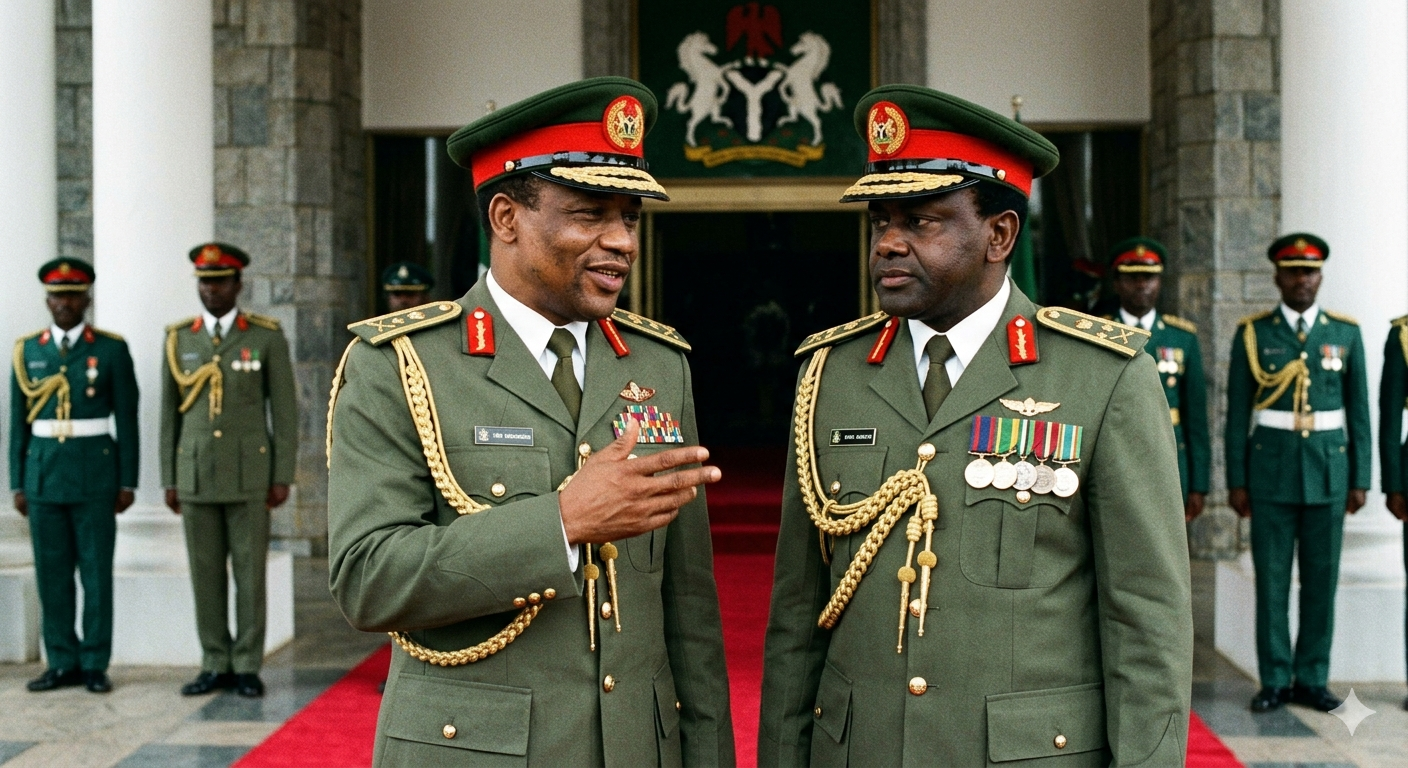
A popular historical narration has resurfaced online questioning whether former military President General Ibrahim Babangida actually described his former second-in-command, General Sani Abacha, as “not bright upstairs” despite acknowledging his crucial role in protecting him and helping him come to power.
According to the narration, Babangida reportedly made the statement while reflecting on Abacha’s influence. The alleged quote reads:
“Sani [Abacha] may not be bright upstairs but he knows how to overthrow governments and overpower coup plotters. He saw to my coming to office in 1985 and to my protection in the many coups I faced in the past…”
This quote is attributed to Babangida through the book “The Tale of June 12” written by his former Political Adviser, Professor Omo Omoruyi.
The account highlights Abacha’s pivotal role during the April 22, 1990 Orkar coup attempt, where he helped crush the plot and saved Babangida and his family. In appreciation, Babangida promoted Abacha to the rank of full General — making him the first serving officer to hold the same rank as the sitting military president — and reportedly began calling him “Khalifa” (successor).
Many Nigerians found the purported quote shocking, especially given Abacha’s reputation for being taciturn yet strategically intelligent. The narration argues that while Abacha lacked Babangida’s charisma, he was highly effective in a silent, calculating way.
Source: This quote is attributed to Babangida through the book ‘The Tale of June 12” written by his former Political Adviser, Professor Omo Omoruyi. It has been referenced in historical compilations and outlets like The Cable newspaper in pieces discussing the complex Babangida-Abacha relationship.
This story has sparked fresh debates online about the true dynamics between the two military leaders who dominated Nigerian politics in the late 1980s and 1990s.






Comments
0 comments