
How Insecure Are You? Signs You May Be Holding Yourself Back in Life
 Follow on Google News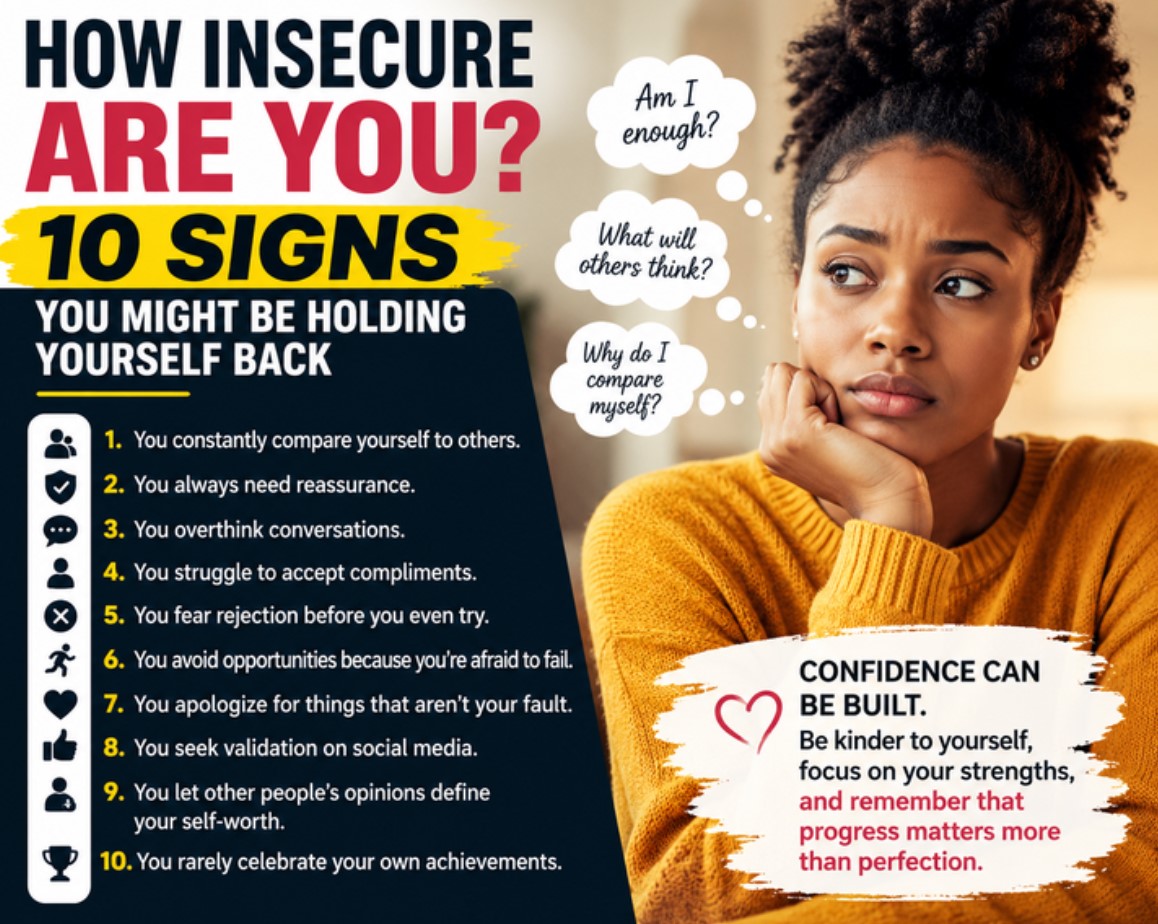
How Insecure Are You? The Subtle Signs That Will Help You Assess Your Level of Self-Doubt
Insecurity is generally mistaken for overt fear and a visible lack of self-confidence. However, insecurity tends to operate quite subtly affecting one’s way of thinking, interacting with other people, and acting. Quite a lot of individuals appear confident from the outside but struggle with self-doubts and insecurities inside.
Understanding insecurities is crucial because they affect our mental state, relations with other people, and overall personal growth. The more we ignore our insecurities, the more power we give them over our decision-making and behavior.
The following three aspects will help you identify how insecurities develop and manifest themselves in our daily activities.
1. Persistent Self-Doubt and Overthinking
The primary sign of an insecure individual is their tendency to overthink. Individuals, who suffer from self-doubt, tend to ruminate over previous conversations, analyzing each word and gesture, being anxious about the ways in which they were judged or evaluated, even in case there was no reason to feel that way.
This type of thinking generates unnecessary mental tension. Instead of moving forward and focusing on the present moment, the mind focuses on the past and imagines different negative scenarios. Over time, this process diminishes the confidence and increases emotional stress.
The similar manifestation of self-doubt is a person’s inability to accept any kind of praise. The compliments of others are easily ignored or downplayed since insecure individuals do not feel that they deserve it.
2. Dependence on Other People’s Opinion
Another characteristic feature of insecure individuals is their dependence on other people’s approval. Insecurity tends to make people constantly ask for some sort of confirmation of their good relations with someone else.
Individuals tend to seek assurance that they are liked, accepted, and valuable. Any delay in receiving a response or a neutral reaction of other people can be instantly interpreted as rejection or criticism.
This dependence on external validation generates emotional instability. Instead of feeling secure inside themselves, such individuals’ self-worth is determined by what other people think. As a result, emotional balance depends on what other people think rather than on a personal self-confidence.
3. Comparison, Jealousy, and Insecurities about Themselves
Insecure individuals tend to compare themselves with others in every possible aspect – appearance, achievements, success, relationships, lifestyle. As a result, there appears a feeling of inferiority and inadequacy even in the case when they are doing well.
The environment around and social media platforms only reinforce this issue since people get bombarded with images of a perfect life of others. This leads to jealousness, self-criticism, and the feeling that other people are somehow better and ahead of them.
Over time, this type of mindset may turn into avoiding behavior, when individuals start to avoid various opportunities since they fear to fail.
The Hidden Dangers of Insecurity
In case when insecurity is left unnoticed and untreated, it starts to affect not just our thought processes but behavior, relations with other people, and decision-making.
Among other issues, it can cause:
- Inability to trust others
- Dependence in emotional terms in relations with other people
- People-pleasing attitude
- Fear of rejection and failures
- Missing opportunities both in a private and professional spheres
Gradually, these problems create a circle within which the person remains insecure.
Conclusion
Insecurity is not an identity but a response, which our psyche learns through experience and perception. The problem here is not in the presence of insecurity but in our ability to identify and tackle it.
The first step in this process is awareness. Once these patterns are identified, they can be confronted and gradually overcome. Over time, they will help people become more confident and emotionally stable.







Comments
0 comments