
The Collapse at Old Ojo Road: How the Satellite Town Mall Came Crashing Down at About 11am
 Follow on Google News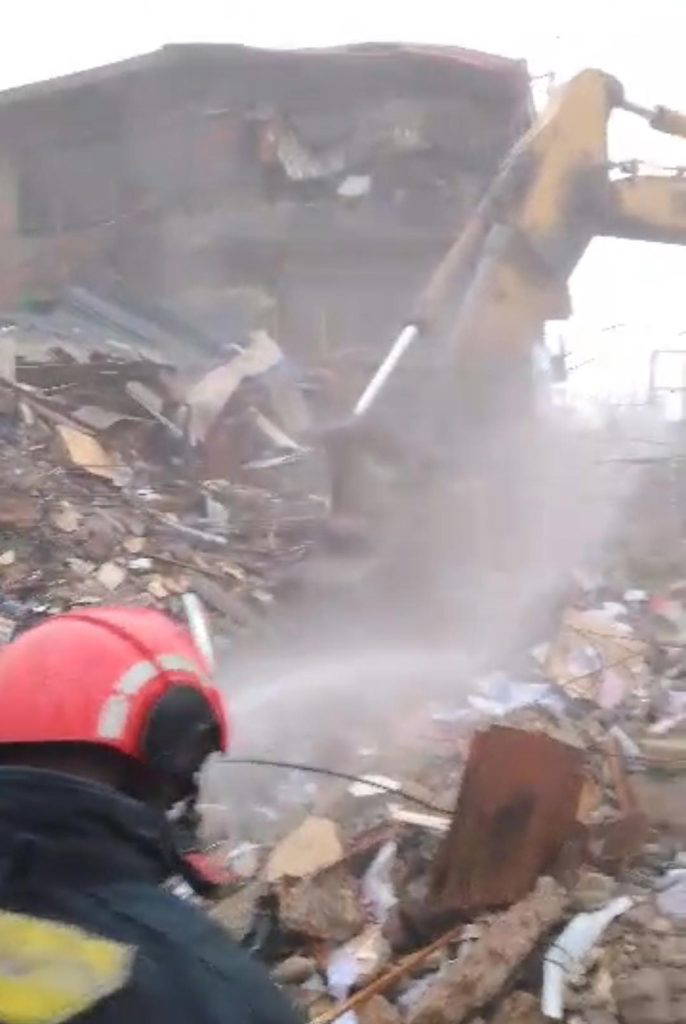
It was a typical bustling morning on Old Ojo Road, near Alakija Bus Stop in Satellite Town, Ori-Ade LCDA, Lagos. The three-storey building, home to several businesses including generator dealerships, a cybercafé, and Point-of-Sale (POS) outlets, stood as it had for years — seemingly ordinary, but with a hidden and deadly secret.
For some time, warning signs had been there. Cracks had appeared on the walls. A cybercafé owner had moved out two years earlier because the structure no longer felt safe. Residents claimed the Lagos State Government had previously marked the building for evacuation. Yet, life and business continued. People came in and out, buying, selling, and going about their daily activities.
Then, at about 11 a.m., everything changed.
The Moment the Building Gave Way
Eyewitnesses described hearing a loud, ominous crack, followed by a deep, terrifying rumble. In seconds, the entire three-storey mall began to collapse in on itself — a classic pancake failure where floors gave way one after another.
Concrete slabs, steel beams, and walls came crashing down in a massive cloud of dust that quickly engulfed the area. Shop owners, customers, and workers inside had almost no time to react. Some tried to run toward exits but were struck by falling debris. Others were trapped instantly under tons of rubble.
A baby girl, who was in the building with her mother or guardian, was among those caught in the collapse. Her tiny body was later recovered from the debris. Children and infants were among both the dead and the lucky survivors pulled from the wreckage.
One man, a friend of an eyewitness named Abdul-Lateef, was hit by a falling concrete block while trying to escape. He did not survive. The force and speed of the collapse meant many victims died from blunt force trauma, crushing injuries, or suffocation under the weight of concrete and twisted metal.
The Rescue Efforts and the Human Toll
As the dust began to settle, residents and passersby rushed in to help despite the danger. They used their bare hands to dig through the rubble, pulling out survivors. Cheers went up when a young boy was rescued alive. Professional responders from the Lagos State Fire and Rescue Service, Federal Fire Service, Nigerian Navy, Police, LASEMA, and the Red Cross soon joined the effort.
By evening, 26 people had been pulled out alive, many with serious injuries. Tragically, nine people lost their lives, including the baby girl. All recovered bodies and rescued victims were taken to Navy Town Hospital.
Why It Happened
This was not a freak accident. The building had shown clear signs of structural weakness for years. Regulatory lapses, possible use of substandard materials, compromised approvals, and failure to enforce safety standards all played a role. The Real Estate Developers Association of Nigeria (REDAN) later pointed to systemic issues: weak enforcement, negligence, and the dangerous decision to keep operating in a building that should have been evacuated long ago.
A Painful Reminder
The collapse at Old Ojo Road claimed nine innocent lives and injured many more. It left families devastated and a community in shock. For the baby girl and the others who died that morning, the tragedy was sudden and merciless.
As rescue operations concluded and investigations began, one thing became clear: this building should never have been standing that day. The collapse at Old Ojo Road is yet another painful chapter in Lagos’ recurring story of building failures — a story written in dust, rubble, and the lives of ordinary people simply trying to earn a living.
May the souls of the departed rest in peace. Their deaths must not be in vain. Stronger enforcement of building codes and accountability for those who put profit above human lives are long overdue.







Comments
0 comments