
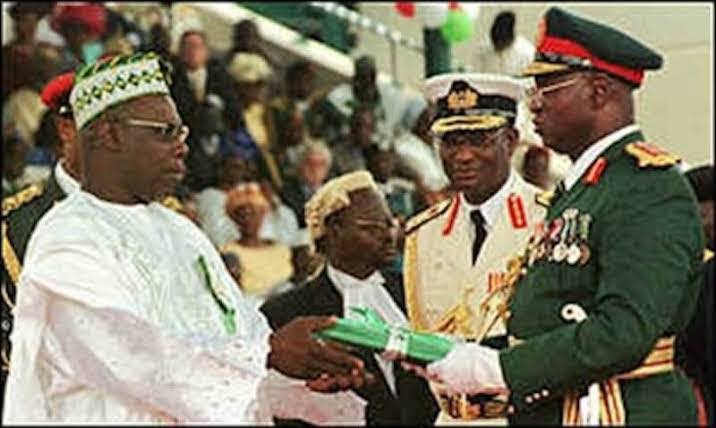
On May 29, 1999, as Olusegun Obasanjo stood on the parade ground at Eagle Square in Abuja taking the oath of office as civilian President, very few people understood the storm raging inside his head.
He had just become the first democratically elected president after 16 uninterrupted years of military rule. The crowd was jubilant. The international community was watching with cautious optimism. But inside Obasanjo — a retired four-star general who had himself ruled as a military Head of State from 1976 to 1979 — there was no euphoria. Only deep, calculated concern.
The Heavy Burden of History
Obasanjo knew Nigerian history too well. He had witnessed how easily the military could strike. He had seen the coups of 1966, 1975, 1983, 1985, and 1993. He had lived through the chaos after Murtala Muhammed’s assassination in 1976. Most painfully, he had watched the country descend into the nightmare of the Abacha years.
As he took the oath, one overriding thought dominated his mind: “This democracy is extremely fragile. The military is still watching. One misstep and they could come back.”

He understood that many senior officers still believed the military was the only “organised institution” capable of ruling Nigeria. Some of them had tasted power as military governors, ministers, and administrators under Babangida and Abacha. They were not going to surrender that influence easily. Obasanjo feared that if these politically exposed officers remained in active service, they could easily coordinate another coup at the slightest sign of weakness in the new civilian government.
The Bold Decision: Mass Retirement of Political Officers
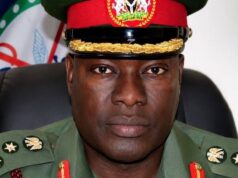
Just weeks after his inauguration, Obasanjo took one of the most decisive and controversial actions of his early presidency: the compulsory retirement of dozens of senior military officers who had held political appointments under previous military regimes.
This was not an emotional decision. It was cold, strategic, and calculated.
His reasoning was simple and ruthless:
– Any officer who had tasted political power (as governor, minister, or administrator) had developed political ambition and networks that posed a direct threat to the new democracy.
– Leaving them in active service was like keeping matches near a keg of gunpowder.
– By retiring them en masse, he drastically reduced the pool of potential coup plotters and sent a clear message to the entire military: “Your duty is to defend the nation, not to rule it.”
Obasanjo later explained that he acted fast because he knew that if he waited too long, the military hawks would begin to regroup and test the new civilian government. The mass retirement was his way of drawing a sharp line between the past and the present.
A Defining Moment for Nigerian Democracy
The move was risky. It angered some powerful retired generals and created tension within the military. But it achieved its primary objective — it bought the Fourth Republic the breathing space it desperately needed to survive its infancy.
By removing the most politically ambitious officers from active duty, Obasanjo reduced the immediate threat of military intervention. He then went further by asserting civilian supremacy, reforming the military hierarchy, and gradually professionalising the armed forces.
Many analysts believe this single early decision was one of the most important reasons Nigeria has enjoyed over 25 years of uninterrupted civilian rule — the longest in its history.
Obasanjo was not naive. He knew the military remained powerful. But by acting decisively in those first few months, he changed the psychology of power in Nigeria. He made future coups much more difficult and expensive to execute.
From the moment he was sworn in, Obasanjo’s mind was not on celebration. It was laser-focused on one goal: “Never again.”
He understood that the survival of Nigeria’s democracy in 1999 depended not on goodwill, but on deliberate, sometimes ruthless actions to neutralise the greatest threat to it — the military’s lingering appetite for power.
And in that critical early test, he passed.
What do you think about Obasanjo’s mass retirement of political officers? Was it necessary for democracy to survive, or was it too harsh? Share your thoughts in the comment section.