
Your Joints May Be Sending You a Warning: 7 Natural Ways to Ease Joint Stiffness
 Follow on Google News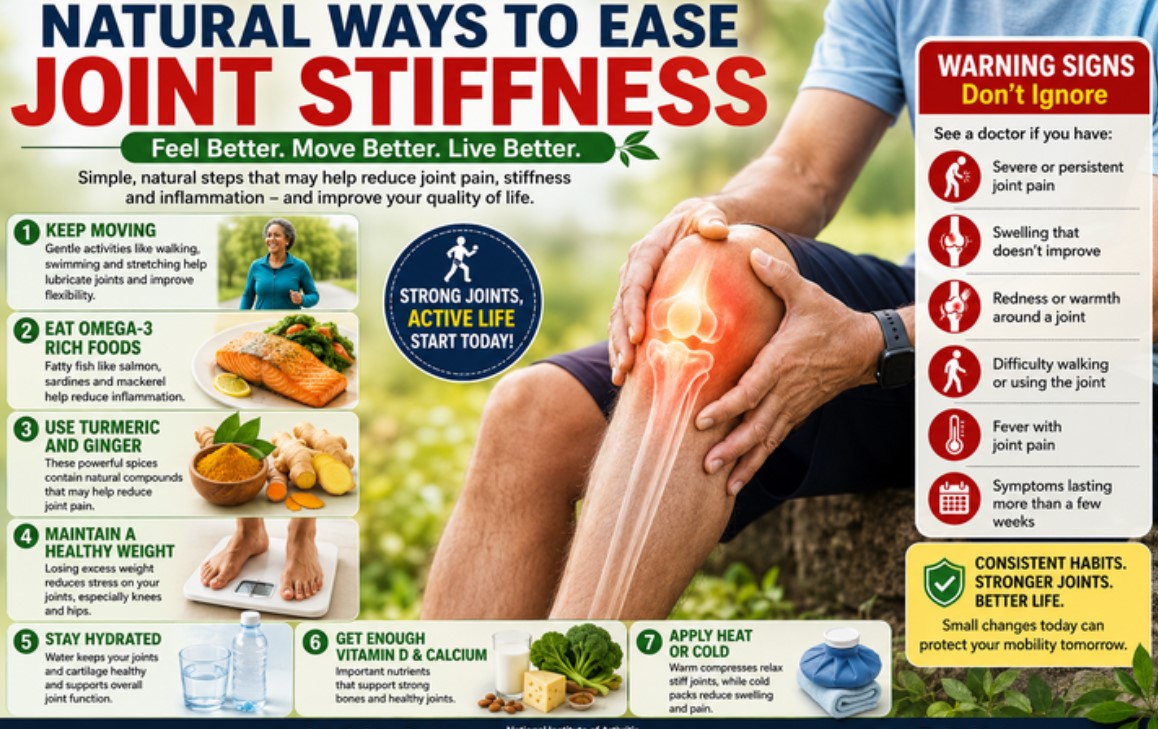
It often starts with something small. You wake up in the morning, and your knees feel stiff. Climbing the stairs becomes uncomfortable. Getting out of a chair takes more effort than it used to.
Many people assume it’s simply part of getting older, but joint stiffness can have many causes, including arthritis, previous injuries, or spending too much time sitting.
While there’s no miracle cure, experts say several healthy habits may help reduce stiffness and improve joint function.
1. Keep Moving
It may seem surprising, but gentle movement is one of the best ways to ease stiff joints. Walking, swimming, cycling, and stretching help lubricate the joints and strengthen the muscles that support them.
2. Eat More Omega-3-Rich Foods
Fatty fish such as salmon, sardines, and mackerel contain omega-3 fatty acids, which may help reduce inflammation linked to some forms of arthritis.
3. Add Turmeric and Ginger to Your Meals
Turmeric contains curcumin, while ginger contains natural anti-inflammatory compounds. Some studies suggest these spices may help reduce joint discomfort in certain people when used as part of a balanced diet.
4. Maintain a Healthy Weight
Every extra kilogram of body weight increases pressure on the knees, hips, and ankles. Losing excess weight can reduce stress on joints and improve mobility.
5. Stay Hydrated
Cartilage contains a large amount of water. Drinking enough fluids helps your body maintain healthy joint function, especially during hot weather or exercise.
6. Get Enough Vitamin D and Calcium
Strong bones help support healthy joints. Vitamin D and calcium are important for bone health. If you think you’re not getting enough, speak with a healthcare professional before taking supplements.
7. Apply Heat or Cold
A warm shower or heating pad may help relax stiff muscles and joints, while a cold pack can help reduce swelling after activity or injury.
When Should You See a Doctor?
Joint stiffness is common, but you should seek medical advice if you experience:
- Severe or persistent joint pain
- Swelling that doesn’t improve
- Redness or warmth around a joint
- Difficulty walking or using the joint
- Fever together with joint pain
- Symptoms lasting more than a few weeks
Early diagnosis can help slow the progression of some forms of arthritis and improve long-term joint health.
The Bottom Line
Healthy joints depend on consistent habits—not quick fixes. Regular physical activity, a balanced diet, maintaining a healthy weight, and following your healthcare provider’s advice can all help you stay active and independent.
Looking after your joints today may help you enjoy better movement for years to come.






Comments
0 comments